Smart glass is rapidly becoming one of the most sought-after technologies in modern architecture and interior design. Businesses, healthcare facilities, hotels, educational institutions, and homeowners are increasingly investing in smart glass solutions to improve privacy, functionality, and aesthetics.
While the initial investment in smart glass may seem higher than traditional glass, many property owners are discovering that the long-term benefits often outweigh the upfront costs. From energy savings and reduced maintenance to improved space utilization and enhanced user experiences, smart glass can provide value for years to come.
As modern buildings continue to adopt intelligent technologies, understanding the return on investment (ROI) of smart glass has become increasingly important. At Glasstronn, we often work with clients who want to understand not only the features of smart glass but also its long-term financial and operational advantages. Glasstronn believes that evaluating ROI helps businesses make informed decisions that support both current needs and future growth.
This guide explores the long-term benefits of smart glass and explains why it is becoming a valuable investment for commercial and residential properties.
What Is Smart Glass?
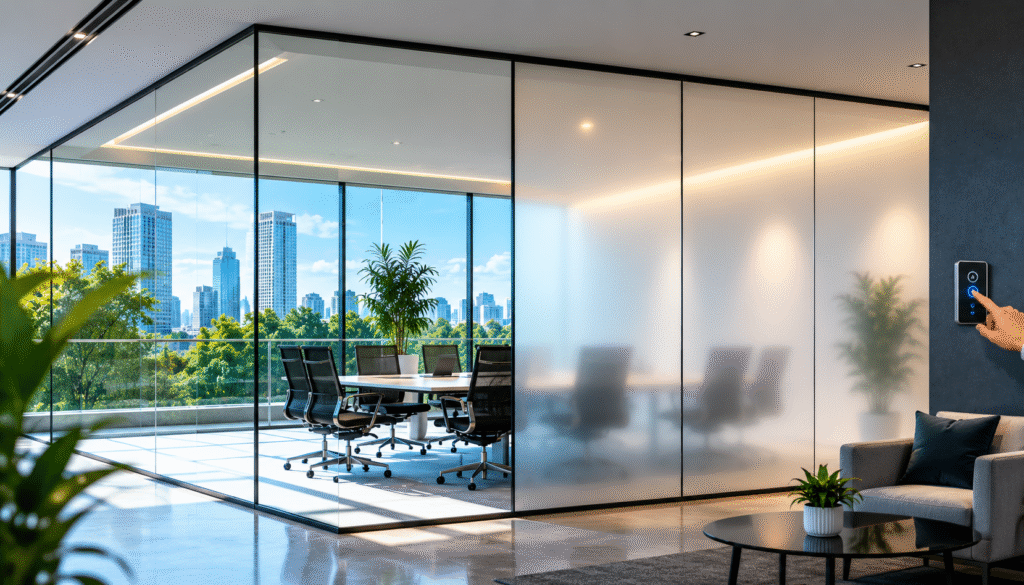
Smart glass is an advanced glass technology that can change its appearance or functionality based on user control. Depending on the type of smart glass, it can switch between transparent and opaque states, control light transmission, improve privacy, and support modern building automation systems.
Unlike conventional glass, smart glass offers flexibility that allows spaces to adapt to changing requirements throughout the day.
Today, several different types of smart glass are available to suit various applications, including switchable glass, electrochromic glass, thermochromic glass, and photochromic glass.
Understanding ROI in Smart Glass Investments
ROI, or Return on Investment, measures the value gained compared to the cost of an investment.
When evaluating smart glass, ROI should not be viewed only in terms of immediate financial savings. Instead, it should include:
- Energy savings
- Reduced maintenance costs
- Increased property value
- Better space utilization
- Improved user experience
- Enhanced building aesthetics
- Long-term operational efficiency
These factors collectively contribute to the overall value of a smart glass investment.
Why Businesses Are Investing in Smart Glass
Modern organizations are under increasing pressure to create efficient, flexible, and attractive environments.
Smart glass helps achieve these goals by providing:
- Instant privacy
- Modern aesthetics
- Improved workplace flexibility
- Better customer experiences
- Reduced reliance on traditional window coverings
As businesses continue to modernize their facilities, smart glass is becoming an important component of intelligent building design.
Long-Term Benefit 1: Reduced Maintenance Costs
Traditional privacy solutions such as curtains, blinds, and shades require regular cleaning, repairs, and replacement.
Over time, these maintenance expenses can add up significantly.
Smart glass eliminates many of these concerns by replacing traditional window treatments with an integrated privacy solution.
With fewer moving parts and less cleaning required, businesses can reduce ongoing maintenance costs and simplify facility management.
Long-Term Benefit 2: Improved Energy Efficiency
Energy efficiency is one of the most important factors influencing building operating costs.
Smart glass can help regulate natural light and reduce dependence on artificial lighting during daylight hours.
In some applications, smart glass can also contribute to better thermal performance by reducing solar heat gain and improving occupant comfort.
Although savings vary depending on building design and usage patterns, improved energy management can positively impact long-term operating expenses.
Long-Term Benefit 3: Better Space Utilization
Modern workplaces require flexibility.
Traditional meeting rooms and private offices often remain underutilized because their design limits adaptability.
Smart glass enables spaces to transition quickly between open and private environments.
Conference rooms, executive offices, healthcare facilities, and hospitality spaces can be reconfigured instantly without physical modifications.
This flexibility allows organizations to maximize the value of their available space.
Long-Term Benefit 4: Enhanced User Experience
Employees, customers, patients, and visitors all benefit from environments that are comfortable, modern, and functional.
Smart glass contributes to a better experience by providing:
- Instant privacy
- Natural light access
- Modern aesthetics
- Improved comfort
- Flexible environments
A positive user experience can support productivity, satisfaction, and overall business performance.
Long-Term Benefit 5: Increased Property Value
Innovative building technologies often enhance property appeal.
Commercial property owners and developers increasingly view smart glass as a premium feature that differentiates buildings from competing properties.
Modern tenants and buyers are attracted to intelligent building features that improve functionality and convenience.
As a result, smart glass can contribute to increased property value and stronger market positioning.
Long-Term Benefit 6: Improved Workplace Productivity
Workplace design directly influences employee performance.
Excessive distractions, lack of privacy, and poor space planning can affect productivity.
Smart glass allows organizations to create environments that balance openness and confidentiality.
Meeting rooms can remain transparent during normal operations and become private when needed.
This flexibility supports collaboration while minimizing distractions.
Long-Term Benefit 7: Better Aesthetics and Design Flexibility
Architects and interior designers appreciate the clean, modern appearance of smart glass.
By eliminating bulky curtains and blinds, smart glass helps create sleek and contemporary interiors.
Its minimalist design complements a wide range of architectural styles and contributes to a professional appearance.
This visual appeal can positively influence customer perceptions and brand image.
Long-Term Benefit 8: Future-Ready Technology
Technology continues to play a larger role in modern buildings.
Smart glass integrates well with:
- Building management systems
- Smart office technologies
- Automated controls
- IoT-based solutions
- Smart home systems
Investing in future-ready technologies helps ensure that buildings remain relevant as industry standards evolve.
Smart Glass Applications Across Industries
Corporate Offices
Businesses use smart glass for meeting rooms, executive offices, and collaborative workspaces.
Healthcare Facilities
Hospitals and clinics use smart glass to improve patient privacy while maintaining hygienic environments.
Hospitality
Hotels incorporate smart glass into guest rooms, bathrooms, conference facilities, and luxury suites.
Retail Spaces
Retailers use smart glass to enhance storefront displays and customer experiences.
Educational Institutions
Schools and universities benefit from flexible learning environments that can adapt to different needs.
The Impact of Ongoing Innovation
The smart glass industry continues to evolve through ongoing research and development.
Recent switchable glass innovations have improved performance, response times, durability, and integration capabilities.
These advancements continue to expand the range of applications and increase the long-term value of smart glass investments.
As technology improves, businesses can expect even greater benefits from future smart glass solutions.
Common Factors That Influence ROI
Several factors can affect the return on investment of smart glass.
Building Type
Commercial buildings often realize different benefits compared to residential properties.
Usage Frequency
The more frequently privacy and flexibility features are used, the greater the value they may provide.
Energy Consumption
Buildings with high energy demands may experience greater efficiency-related benefits.
Maintenance Requirements
Replacing traditional privacy solutions can reduce long-term maintenance costs.
Property Objectives
Organizations focused on innovation, employee experience, or customer engagement may see additional value beyond direct financial savings.
Challenges to Consider
While smart glass offers many benefits, organizations should also consider:
- Initial investment costs
- Professional installation requirements
- Electrical integration needs
- Project-specific customization
Evaluating these factors helps ensure realistic expectations and successful project outcomes.
Choosing the Right Smart Glass Partner
Selecting the right supplier is critical to maximizing long-term ROI.
Important considerations include:
- Product quality
- Technical expertise
- Installation capabilities
- Customer support
- Industry experience
- Project portfolio
Many architects, builders, and property owners searching for the best switchable glass company in Bangalore evaluate suppliers carefully to ensure they receive reliable products and long-term support.
Is Smart Glass Worth the Investment?
For many organizations, the answer is yes.
Although smart glass may involve a higher initial investment compared to traditional glass solutions, its long-term advantages often justify the cost.
Benefits such as reduced maintenance, enhanced flexibility, improved aesthetics, better user experiences, and increased property value can generate meaningful returns over time.
The exact ROI varies depending on project goals, building type, and usage patterns, but smart glass continues to demonstrate strong value across a wide range of applications.
Future Outlook
As commercial and residential buildings become increasingly technology-driven, demand for smart glass is expected to continue growing.
Future developments may include:
- Greater automation capabilities
- Improved energy performance
- Enhanced user controls
- More affordable solutions
- Advanced integration with smart building systems
These trends will further strengthen the role of smart glass in modern architecture and building management.
FAQs
1. What is smart glass and how does it work?
Smart glass is an advanced glass technology that can change from transparent to opaque with the touch of a button or through automated controls. It uses specialized technologies to provide privacy, light control, and enhanced functionality.
2. Is smart glass a good long-term investment?
Yes, smart glass can be a valuable long-term investment because it offers benefits such as reduced maintenance costs, improved space utilization, enhanced aesthetics, and increased property appeal over time.
3. Can smart glass help reduce energy consumption?
Smart glass can contribute to energy efficiency by optimizing natural light usage and helping manage heat gain in certain applications, which may reduce reliance on artificial lighting and climate control systems.
4. Where is smart glass commonly used?
Smart glass is widely used in corporate offices, hospitals, hotels, retail stores, educational institutions, conference rooms, executive cabins, luxury homes, and commercial buildings.
5. How long does smart glass last?
The lifespan of smart glass depends on product quality, installation standards, and usage conditions. With proper installation and maintenance, high-quality smart glass can provide reliable performance for many years.
Conclusion
Smart glass is more than just a modern design feature. It is a long-term investment that can improve functionality, efficiency, aesthetics, and user experiences across a variety of environments. By supporting privacy, flexibility, and intelligent space management, smart glass helps organizations create spaces that meet the demands of today’s dynamic world.
The long-term value of smart glass extends beyond immediate cost considerations. Reduced maintenance, improved energy performance, enhanced workplace experiences, and increased property appeal all contribute to a stronger return on investment over time.
At Glasstronn, we understand the importance of evaluating both short-term requirements and long-term benefits when considering smart glass solutions. Through innovative technologies and professional expertise, Glasstronn helps organizations identify solutions that align with their goals and deliver lasting value. As smart building technologies continue to evolve, Glasstronn remains committed to supporting businesses and property owners with intelligent glass solutions designed for the future.