
Architecture is evolving rapidly with the help of smart technologies, sustainable materials, and innovative interior solutions. One of the biggest trends shaping modern buildings in 2026 is switchable glass technology. Architects around the world are now focusing on smart design elements that combine aesthetics, functionality, and energy efficiency. Companies like Glasstronn are helping architects and designers explore advanced smart glass solutions while also helping them choose the right switchable film for modern commercial and residential projects.
Modern clients are increasingly demanding buildings that look elegant, improve user experience, and support sustainable living. Traditional architectural elements like curtains, blinds, and solid walls are slowly being replaced by smart materials that provide greater flexibility. Switchable glass perfectly fits this transformation because it allows spaces to change instantly while maintaining a clean and minimalistic appearance.
In this blog, we will explore the latest switchable glass innovations every architect should know in 2026 and understand how this technology is shaping the future of modern architecture.
What is Switchable Glass?
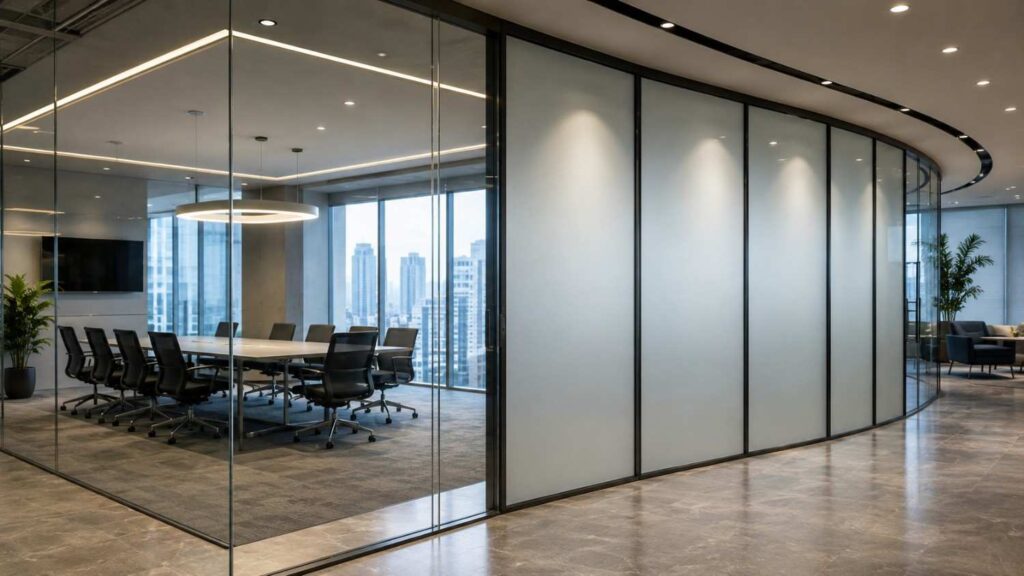
Switchable glass is an advanced glass technology that changes from transparent to opaque using electricity. Most systems are based on PDLC (Polymer Dispersed Liquid Crystal) technology.
How It Works
- When power is ON, the liquid crystals align and the glass becomes clear.
- When power is OFF, the crystals scatter and the glass turns frosted or opaque.
This allows users to control privacy instantly with a switch, remote, or smart automation system.
Why Architects are Using More Smart Glass in 2026
Architects today focus on:
- Sustainable design
- Smart building technology
- Flexible spaces
- Energy efficiency
- Modern aesthetics
- User comfort
Switchable glass helps architects achieve all these goals while improving the visual appeal of buildings.
Some major reasons for its growing popularity include:
- Instant privacy control
- Better natural light management
- Futuristic interior appearance
- Smart automation integration
- Flexible room layouts
- Improved energy efficiency
Modern buildings are now expected to be intelligent, adaptable, and visually attractive, making smart glass an important architectural solution.
Innovation 1: AI-Controlled Smart Glass Systems
One of the biggest innovations in 2026 is AI-integrated switchable glass technology.
Features
- Automatic transparency adjustment
- Occupancy-based privacy control
- Weather-responsive tint adjustment
- Smart lighting optimization
AI systems can automatically control smart glass based on:
- Sunlight intensity
- Indoor temperature
- Room usage
- Time of day
This improves comfort, convenience, and energy savings.
Innovation 2: Voice-Controlled Smart Glass
Voice-controlled automation is becoming more common in modern buildings.
Integration Options
- Alexa
- Google Assistant
- Smart home systems
- IoT platforms
Users can now control glass transparency using simple voice commands, improving accessibility and user experience.
Innovation 3: Energy-Efficient Smart Glass
Energy efficiency is becoming a major priority in modern architecture.
New switchable glass systems now offer:
- Better heat control
- UV protection
- Reduced glare
- Lower energy consumption
These innovations help reduce air conditioning usage and improve indoor comfort, especially in commercial buildings with large glass facades.
Innovation 4: Transparent LED Smart Glass
Transparent LED technology is changing how architects design retail and commercial spaces.
Applications
- Shopping malls
- Retail showrooms
- Airports
- Hotels
- Commercial facades
Transparent LED smart glass combines digital display technology with architectural glass, allowing businesses to display advertisements and visuals without blocking visibility.
This innovation creates futuristic and interactive building designs.
Innovation 5: Smart Glass for Sustainable Architecture
Green building practices are becoming more important in 2026.
Switchable glass supports sustainable construction by:
- Improving daylight usage
- Reducing artificial lighting needs
- Controlling solar heat gain
- Supporting energy-efficient building certifications
Architects now use smart glass to create environmentally friendly buildings with lower energy consumption.
Innovation 6: Smart Glass for Healthcare Design
Healthcare architecture is rapidly adopting switchable glass technology.
Applications
- ICU rooms
- Consultation rooms
- Patient partitions
- Operating room observation panels
Benefits
- Better hygiene
- Instant privacy
- Easier cleaning
- Modern healthcare environments
Hospitals prefer smart glass because it eliminates the need for curtains that collect dust and bacteria.
Innovation 7: Flexible Smart Office Spaces
Modern offices are moving toward flexible workspace concepts.
Switchable glass helps create:
- Dynamic meeting rooms
- Private workspaces
- Open collaborative areas
- Smart conference rooms
This flexibility is especially important in hybrid work environments.
Innovation 8: Smart Residential Interiors
Luxury homes are increasingly using switchable glass technology.
Residential Applications
- Bathrooms
- Bedrooms
- Balconies
- Home offices
- Living room partitions
Modern homeowners prefer smart glass because it creates elegant, spacious, and technology-driven interiors.
Innovation 9: Solar-Powered Smart Glass
Solar-powered switchable glass is becoming an exciting innovation in sustainable architecture.
Benefits
- Reduced electricity dependency
- Better environmental performance
- Improved energy savings
Future smart buildings may use self-powered glass systems that operate using solar energy collected directly from the building facade.
Innovation 10: Smart Glass Integration with Building Management Systems
Modern commercial buildings now integrate switchable glass with centralized building management systems.
Features
- Automated scheduling
- Climate control integration
- Lighting optimization
- Occupancy sensors
This allows architects and facility managers to improve building efficiency and user comfort.
How Architects are Using Smart Glass Creatively
Architects are now using switchable glass in creative ways such as:
- Floating partitions
- Smart skylights
- Interactive facades
- Dynamic conference rooms
- Privacy-controlled bathrooms
- Transparent display walls
These applications help create futuristic architectural experiences.
Importance of Proper Installation
No matter how advanced the technology is, proper installation is extremely important for long-term performance.
Architects and builders should understand how to install switchable glass correctly to avoid issues such as:
- Uneven transparency
- Electrical problems
- Delayed switching
- Reduced lifespan
Professional installation ensures:
- Better safety
- Smooth operation
- Long-term durability
- Improved user experience
Proper planning also helps integrate smart glass more effectively into modern building designs.
Factors Architects Should Consider Before Choosing Smart Glass
Before specifying smart glass for a project, architects should evaluate:
- Project budget
- Energy goals
- Building orientation
- Privacy requirements
- Automation compatibility
- Maintenance needs
- Glass performance ratings
Choosing the right smart glass technology depends on the specific needs of the building and client expectations.
Future Trends in Switchable Glass Technology
The future of smart glass technology is expected to include:
- AI-powered privacy control
- Interactive touch-sensitive glass
- Self-cleaning smart glass
- Advanced solar integration
- Fully automated building facades
- Augmented reality glass systems
As cities become smarter, switchable glass will play an even bigger role in urban architecture.
Why Smart Glass is Becoming Essential for Architects
Modern architecture now focuses on creating buildings that are:
- Smart
- Sustainable
- Flexible
- User-friendly
- Visually appealing
Switchable glass supports all these goals while helping architects create innovative building experiences.
Many architects and developers now search for the best switchable glass company in Bangalore to ensure they receive high-quality products, advanced technology, and reliable installation support for modern projects.
FAQs
1. What is switchable glass technology?
Switchable glass is a smart glass technology that changes from transparent to opaque using electricity, allowing instant privacy control in modern buildings.
2. Why are architects using switchable glass in 2026?
Architects are using switchable glass because it supports modern design trends such as smart automation, energy efficiency, flexible spaces, and sustainable architecture.
3. Can switchable glass be integrated with smart home systems?
Yes, modern switchable glass systems can be connected with smart home technologies, voice assistants, mobile apps, and building automation systems.
4. Is switchable glass energy efficient?
Yes, switchable glass helps control sunlight, reduce glare, and improve indoor temperature management, which can lower energy consumption in buildings.
5. Where is switchable glass commonly used in modern architecture?
Switchable glass is commonly used in offices, luxury homes, hospitals, hotels, airports, retail spaces, conference rooms, and commercial buildings.
Conclusion
Switchable glass technology is transforming modern architecture in 2026 by combining smart functionality with innovative design possibilities. From AI-controlled systems and voice automation to transparent LED displays and sustainable building integration, smart glass is becoming one of the most important materials in future-ready architecture.
Architects are increasingly using switchable glass to create flexible, energy-efficient, and visually impressive spaces for homes, offices, hospitals, hotels, and commercial buildings. Companies like Glasstronn are helping drive this innovation by providing advanced smart glass solutions that support modern architectural creativity and intelligent building design. As technology continues to evolve, switchable glass will remain a key element in shaping the future of smart architecture and urban living.