A client walks into a half-finished cabin, looks at the frosted film on the partition, and asks whether it can just be clear when nobody’s inside. Fair question. It’s also the one that pushes most designers toward smart privacy glass, because ordinary glazing forces a permanent decision: see-through or not, forever. Glasstronn offers smart glass solutions that make privacy flexible without compromising modern interior design.
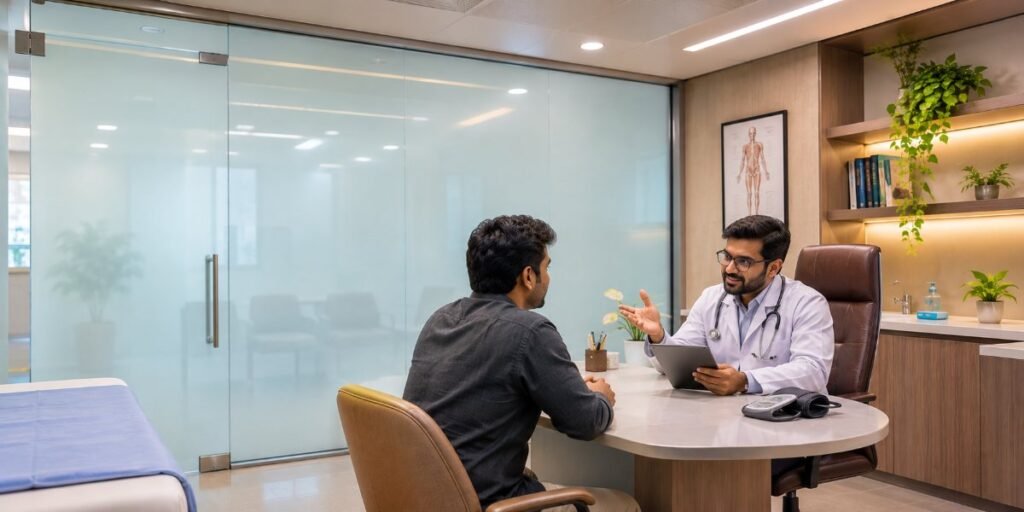
Interiors stopped working that way years ago. Meeting rooms double as focus rooms. Consulting chambers need visual separation for ten minutes at a stretch. Homes want daylight pulled deep into the plan without putting a bedroom on display at 7pm. A panel that changes state on demand solves a problem that etched patterns and fabric blinds only ever worked around. Glasstronn will help you explore smart glass options suited to your space and privacy requirements.
What Smart Privacy Glass Actually Does
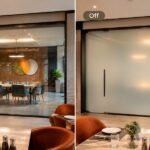
Strip away the sales language and smart privacy glass is a sandwich. Two sheets of glass, laminating interlayers, and between them a thin film holding liquid crystals suspended in a polymer. Send AC voltage through a small driver and the crystals align, letting light travel straight through. Cut the supply and they scatter, turning the panel milky white. The switch happens in well under a second.
How the liquid crystal layer behaves
Most of what gets specified is PDLC glass — polymer dispersed liquid crystal. It defaults to opaque and needs power to stay clear, which matters twice over. A power cut leaves a bathroom or boardroom private rather than exposed, the safer way to fail. But a panel that stays clear eight hours a day draws current eight hours a day. The load is modest, roughly a few LED lamps per square metre, though across a long run of partitions it belongs on the load schedule.
Where blackout film differs
Dye-doped liquid crystal, sold as blackout switchable film, goes much further in the off state. Standard PDLC glass still passes diffuse light when opaque — you lose the image, not the brightness. Blackout film blocks far more, which is what a home theatre or a scan room actually needs. It costs more and reads slightly less water-clear when on, so specify it only where genuine darkness is the requirement.
Why Traditional Partitions Keep Disappointing
Frosted and etched glass is cheap and permanent, and the permanence is the trap. The day a room’s function changes, the glass is wrong, and swapping it means dust, downtime and new hardware. Integral blinds inside a sealed cavity handle switching mechanically, but the tilt mechanism is usually the first component to fail after a few years of daily handling.
Room-side fabric blinds interrupt the clean line that justified glass in the first place. In humid coastal cities they discolour faster than anyone budgets for. Switchable privacy glass avoids that whole category of problem — no moving parts in the panel, nothing collecting grit in a head rail, and the same visual language open or closed.
Laminated Panels or Retrofit Film?
Two formats dominate the privacy smart glass market, and the choice is mostly about whether the glass already exists.
| Factor | Laminated smart privacy glass | Self-adhesive retrofit film |
| Best for | New builds, fresh joinery, structural partitions | Occupied offices, existing glazing, tenant fit-outs |
| Optical quality | Better; film is pressed between plies in a controlled line | Good, but depends on the applicator’s technique |
| Edges | Concealed and sealed inside the laminate | Exposed, needs a bead or frame to protect it |
| Site conditions | Factory work; site handles installation only | Needs a still, dust-controlled environment |
| Serviceability | Panel replacement if a fault develops | Film can be stripped and reapplied |
| Indicative cost | Higher per sq ft | Lower per sq ft, plus application labour |
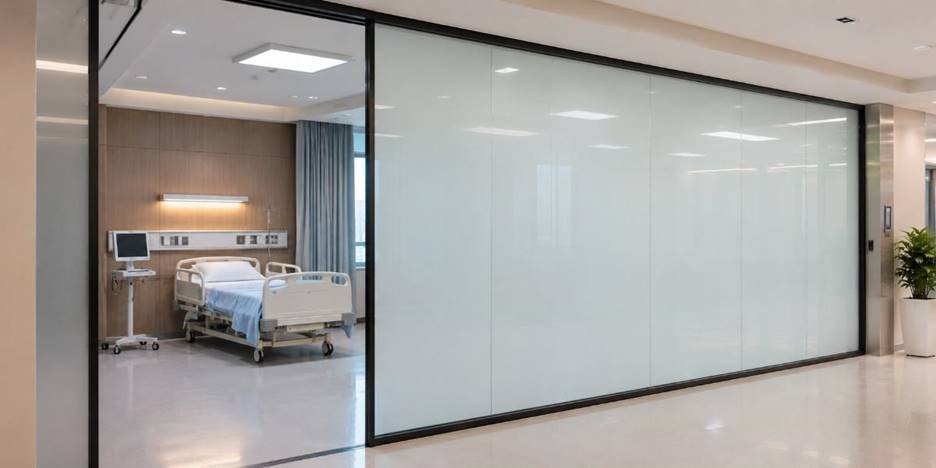
Laminated panels are the better long-term call for most interior packages. Retrofit film earns its place when the glazing is already up and demolition isn’t on the table — a leased floor, a completed villa, a hospital wing that can’t shut down.
Power, Drivers and Control in Smart Glass Design
Projects go wrong here, almost always for the same reason: the electrical drawing was frozen before the glass was chosen.
Wiring runs and driver placement
Each panel or group needs a driver stepping mains down to the film’s operating voltage. Drivers give off heat and occasionally hum faintly, so they belong in a serviceable ceiling void, never behind sealed gypsum. Sound smart glass design coordinates conduit positions with the glazing contractor at shell stage, before the ceiling grid is set out.
Switching options
• Wall switch : simplest, cheapest, and nobody argues with it at handover.
• Remote or RF : useful in villas where extra switch plates would clutter a wall.
• Door contact sensing : the panel opaques when the latch engages, which suits consulting rooms.
• BMS integration : worth it on large floors where room bookings should drive the glass.
Reading the Spec Sheet Before You Approve It
Two numbers decide whether the finished job matches the render. Visible light transmission in the clear state tells you how much daylight really gets through; a faint tint is normal and shows up most against white walls. Haze in the clear state is the honest measure of how crisp the view is — low single digits looks like glass, higher values look like mist. Because the assembly is laminated, acoustic performance also beats a single monolithic pane of the same thickness, which is a quiet argument for smart glass interiors on open-plan floors.
Where Smart Privacy Glass Earns Its Place
Specifying it everywhere is the fastest way to blow a fit-out budget. Smart privacy glass pays for itself in boardrooms facing an open workspace, in diagnostic rooms, in bathrooms borrowing light from a bedroom, in hotel suites, and in retail where a stockroom shouldn’t be visible during trading hours. Corridors and rooms that stay private all day are better served by a solid wall. Good smart glass interiors treat the switchable panel as a considered move, not a default finish.
What Smart Privacy Glass Costs
Ask three suppliers and you’ll get three answers, because the variables are genuine: glass thickness, panel size, film grade, edge work, and whether drivers are included. As a planning figure, laminated smart privacy glass in India typically sits in the mid-four-figure rupees per square foot band, with retrofit film noticeably lower before application labour. Treat every number as indicative until someone has measured your openings. Budgeting for privacy smart glass should also cover the unglamorous items — drivers, cabling, a spare panel for critical rooms, and the electrician’s time.
Installation, Handover and Warranty
Panels arrive with tails attached, and those tails are fragile. Glazing crews must handle them by the edge, not the corner where the connection sits. Frames need to be dry and square; a twisted frame stresses the laminate and shows up months later as delamination. Ask what the smart privacy glass warranty covers film performance, the driver, or both and for how long, since those periods often differ. Have driver locations marked on the as-built drawings.
Frequently Asked Questions
Does smart privacy glass need power all the time?
Only while it’s clear. PDLC panels are opaque with no supply and turn transparent when energised, so a room left private overnight uses nothing. Consumption per square metre is small, similar to modest LED lighting, though across a full floor of partitions it’s worth listing on the electrical load schedule.
Can smart privacy glass be fitted to glazing that’s already installed?
Yes, using self-adhesive switchable film applied to the existing pane. Results depend almost entirely on surface preparation and the applicator’s skill, and exposed edges need protecting with a bead or frame. It’s the practical route for occupied offices and finished homes where replacing whole panels isn’t realistic.
How private is the opaque state, really?
Silhouettes vanish and detail disappears at any normal distance. Standard PDLC still transmits diffuse light, so a backlit figure pressed against the glass can register as a soft shadow. If you need true darkness rather than visual privacy, blackout film is the correct specification.
Does switchable privacy glass survive Indian humidity and heat?
Laminated panels cope well, because the film is sealed inside the interlayer. Retrofit film is more sensitive at exposed edges, so bathrooms and coastal sites need careful edge detailing. Avoid long spells of unshaded direct sun on any switchable panel, which shortens film life whichever format you choose.
Conclusion
Architects keep returning to smart privacy glass for practical reasons, not novelty. One panel does two jobs that used to need two products, with no slats to jam, no fabric to fade, and no permanent frosting decision made a year before anyone knows how the room will actually be used. Get the format right for the site, coordinate wiring early, read the haze and transmission figures rather than the brochure photographs, and the result holds up for years. Smart privacy glass rewards planning far more than it rewards budget. Glasstronn offers smart glass solutions designed for changing privacy requirements in modern spaces.
If you’re weighing up formats, panel sizes or control options for a live project, walking through the drawings with an experienced supplier is the quickest way to get answers matched to your site. Glasstronn will help you explore suitable options for your project.
Looking for Smart Privacy Glass for Your Next Project?
Bring natural daylight and flexible privacy together with smart privacy glass. Whether you’re designing corporate cabins, conference rooms or residential interiors, explore solutions that adapt to changing privacy needs without compromising the space’s appearance. Talk to a Smart Glass Expert
Follow Glasstronn on Instagram for smart glass projects, switchable film applications, technology updates and practical insights into intelligent privacy solutions.