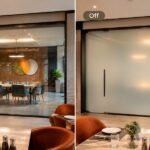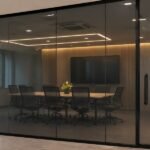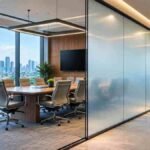
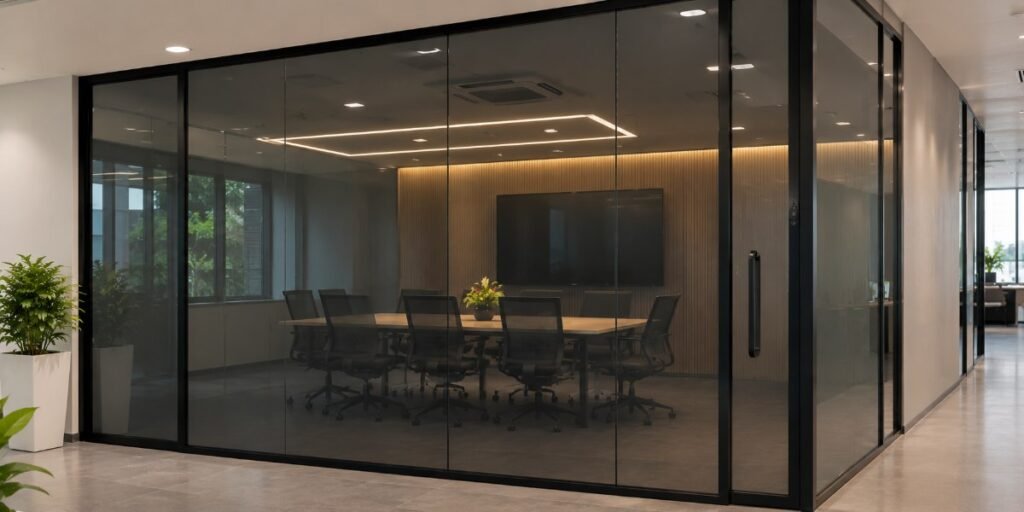
Walk any recently built corporate floor in Mumbai or Gurugram and you’ll see the same design decision repeated: glass everywhere. Then walk it again at 4pm and you’ll see the workaround, which is usually a set of half-broken blinds, a whiteboard shoved against a partition, or a manager conducting a difficult conversation in a stairwell. Blackout switchable glass for offices exists because those two things are in conflict. The architecture wants transparency; the business needs privacy roughly six times a day. Glasstronn provides switchable glass solutions designed for offices with changing privacy requirements.
The appeal is that you no longer have to choose. One panel does both states, on demand, without anything hanging off the ceiling. Glasstronn focuses on practical smart glass solutions that combine transparency and privacy in modern workplaces.
The Problem With Glass-Walled Floorplates
Open, glazed offices were meant to signal accessibility and let daylight reach the core. They do. They also make every meeting room a fishbowl. Appraisals, disciplinary conversations, salary discussions, client negotiations and legal reviews all happen behind glass that anyone can read a laptop screen through.
Blinds were the default answer and they age badly. Slats warp, cords fail, dust settles, and in a sealed tower nobody cleans them properly. Within three years the neat design intent looks tired, which is where switchable office glass starts to look like the cheaper long-term choice rather than the extravagant one.
What Blackout Switchable Glass for Offices Actually Does
A liquid crystal layer sits between conductive films, laminated inside the glass or applied as a retrofit layer. Power it and the crystals align, so the panel is clear. Cut the power and the layer scatters light, so the panel is private. The switch takes under a second. That single behaviour is the whole argument for blackout switchable glass for offices, and everything else is detail about how dark, how big and how controlled.
PDLC Office Glass Versus Blackout Builds
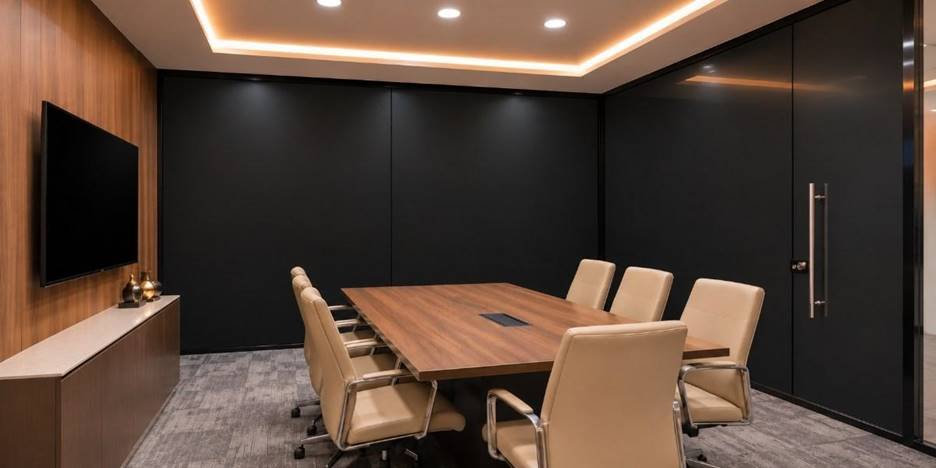
Standard PDLC turns a milky translucent white. It kills the view, keeps most of the daylight, and suits general privacy. Blackout material, usually DDLC-based, drives far darker. If your meeting room doubles as a presentation space, you want blackout; a translucent panel on a west-facing facade at 3pm leaves the screen washed out and the room uncomfortable. Most corporate specifications end up mixing both, using PDLC office glass on internal partitions and blackout where projection or strict confidentiality matters.
Power, Drivers and Controls
The system runs on AC through a driver, generally around 48-65V, drawing roughly 5-7 watts per square metre while clear and nothing while opaque. Control options for switchable office glass range from a simple wall plate to remotes, occupancy sensors and integration with building management or room-booking systems. Corporates increasingly want the last of those, so a room turns private automatically when a confidential meeting is booked.
Meeting Rooms, Boardrooms and Executive Cabins
This is where the money goes first. A boardroom with blackout panels can move from open and welcoming to fully closed for a results presentation without anyone touching a blind. Executive cabins get daylight and a view of the floor, plus privacy for a call. Smaller huddle rooms benefit too, though the cost per room means most firms deploy blackout switchable glass for offices selectively, in the rooms that host sensitive discussions.
There’s a cultural effect worth noting. Teams use rooms with switchable panels more readily than rooms with blinds, because operating the privacy takes no effort and doesn’t look like a statement to the rest of the floor.
Confidentiality, Compliance and Client Trust
Banking, legal, healthcare administration and technology firms deal with information that shouldn’t be casually visible. Screens facing a corridor are a genuine exposure. Office privacy glass reduces that risk in a way people actually use, unlike a policy asking staff to angle their monitors.
Client-facing spaces get a second benefit. A prospective client watching a wall turn opaque before a commercial discussion reads it as seriousness about their information. That impression is hard to buy any other way, and it is one of the softer reasons blackout switchable glass for offices spreads by word of mouth between firms in the same tower.
Office Privacy Glass Compared With the Alternatives
| Option | Privacy quality | Maintenance | Space used | Indicative cost |
| Venetian or roller blinds | Good, but gaps and misalignment | High, replaced every few years | Sits proud of the glass | Low upfront |
| Frosted or applied film | Permanent, no clear state | Very low | None | Low |
| Drywall partition | Total | Low | Blocks daylight, eats floorplate | Moderate |
| Retrofit switchable film | Excellent, on demand | Low | None | Roughly Rs 900-1,800 per sq ft |
| Laminated switchable glass | Excellent, on demand | Low | None | Roughly Rs 1,800-3,500 per sq ft |
Those ranges are indicative and vary with panel size, blackout versus standard material, driver count and control integration. What the table doesn’t show is the ten-year picture: blinds get replaced, film and glass usually don’t, and blackout switchable glass for offices tends to close much of the gap over a lease term.
What Blackout Switchable Glass for Offices Costs Over Time
Upfront, it is clearly more expensive than blinds. Nobody should pretend otherwise. The case is built on three things: replacement cycles avoided, the floor area saved by not building solid walls, and the daylight retained across the plate, which has a real effect on how a floor feels and on lighting load.
Running cost is negligible. A typical meeting room’s glazed wall draws a handful of watts while clear and nothing while private, so the annual electricity cost is a rounding error next to the lighting. Expect a service life beyond ten years for well-made panels, with failures usually traced to edge moisture, a marginal driver or site damage rather than switching cycles. That lifespan is why finance teams increasingly treat smart glass for offices as an asset rather than a finish.
Specifying It Without Regret
• Confirm VLT and haze figures in both states, in writing, rather than accepting adjectives.
• Decide fail-clear or fail-opaque behavior for each room, since most systems default to opaque on power loss.
• Check maximum panel sizes early, because large openings may need a mullion you hadn’t drawn.
• Agree driver locations, access hatches and cable routes before ceilings close.
• Ask about acoustic performance separately, as the interlayer helps but a proper acoustic build-up matters more.
• Read the warranty for delamination and color shift, not just electrical failure.
For occupied buildings, retrofit film applied to existing glass avoids replacing glazing altogether, which usually turns a multi-week job into a couple of night shifts. Specified this way, blackout switchable glass for offices becomes a fit-out item rather than a construction one.
Frequently Asked Questions
Is blackout switchable glass for offices worth the extra cost?
For rooms hosting confidential or client-facing meetings, generally yes, once you count blind replacement, cleaning and the floor area saved versus solid walls. For a general open-plan area or a low-use huddle room, it is harder to justify. Most firms fit it selectively rather than across an entire floor.
Does it provide acoustic privacy as well as visual privacy?
Only partially. The laminated interlayer adds some sound reduction, but visual privacy and acoustic privacy are different problems. If confidential conversations are the concern, specify the partition system, seals and ceiling detail for acoustics separately and treat the switchable layer as a visual solution.
Can it be added to an office that’s already occupied?
Yes. Retrofit switchable film goes onto existing glass, typically over night or weekend shifts, so smart glass for offices no longer means replacing glazing. The glass needs to be flat, clean and undamaged, and the electrical rough-in should be complete before the film team starts.
What happens during a power cut?
Most panels default to opaque, so privacy is maintained but visibility is lost. In rooms where sightlines matter, put the drivers on backup power. Worth confirming at design stage, because retrofitting a circuit later into a finished glazed partition is far more disruptive than planning it in.
Conclusion
The reason corporate teams keep specifying blackout switchable glass for offices isn’t novelty. It’s that a glazed floorplate creates a privacy problem the design itself can’t solve, and every traditional fix either blocks daylight, eats floor area or wears out. A switchable panel keeps the openness the building was designed around and hands privacy back on demand. Just make the decision with real numbers in front of you: VLT, haze, panel sizes, failure mode, driver locations and what the warranty genuinely covers. Glasstronn provides switchable glass solutions designed to meet these practical workplace requirements.
If you’re weighing up your options, walking an experienced supplier through your floor plan and room usage is the quickest way to work out where it pays and where it doesn’t. Glasstronn will help you explore suitable options for your office project.
Looking to Upgrade Your Workplace with blackout switchable glass
Create private meeting spaces without compromising your office’s open design. Explore suitable glass configurations, privacy controls and installation requirements for your workspace. Connect with a Switchable Glass Specialist .
Follow Glasstronn on Instagram for smart glass projects, switchable film applications, technology updates and practical insights into intelligent privacy solutions.