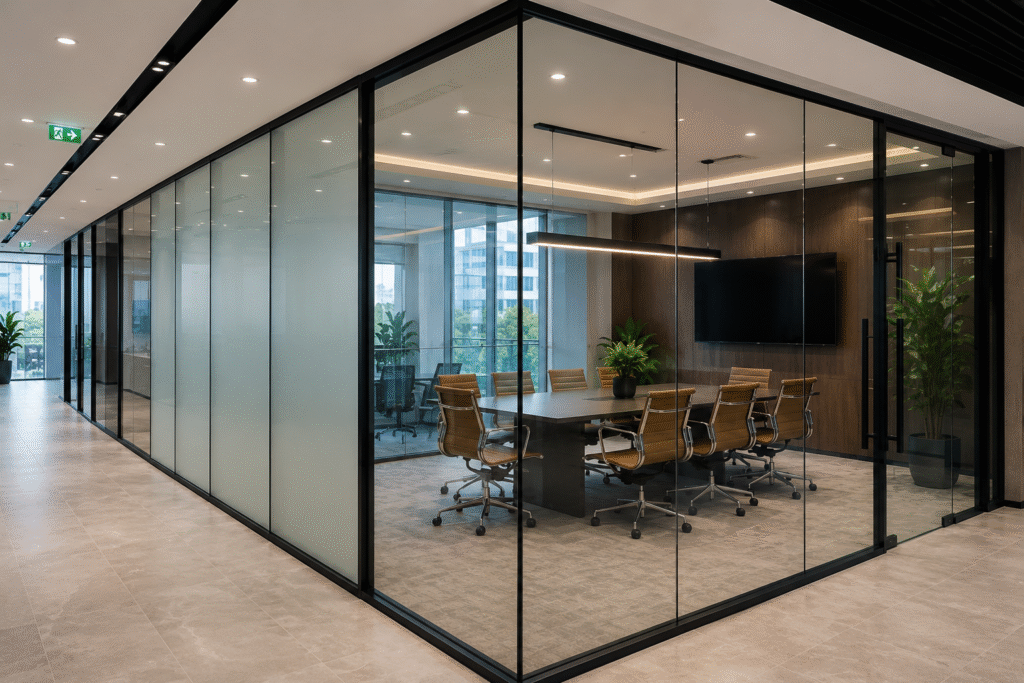
Modern commercial buildings are evolving rapidly, with businesses looking for innovative solutions that improve privacy, aesthetics, functionality, and energy efficiency. One technology that has gained significant attention in recent years is switchable glass. This advanced glass solution can instantly change from transparent to opaque with the touch of a button, offering flexibility that traditional glass cannot provide.
From corporate offices and healthcare facilities to hotels and retail spaces, switchable glass is transforming the way commercial environments are designed and used. It helps create dynamic spaces that can adapt to changing requirements while maintaining a modern and professional appearance.
At Glasstronn, we have seen growing interest in switchable glass across multiple industries. As organizations seek smarter building solutions, Glasstronn continues to support projects that combine privacy, innovation, and contemporary design.
In this article, we will explore the top 10 applications of switchable glass in modern commercial buildings and understand why this technology is becoming an essential part of today’s architectural landscape.
What Is Switchable Glass?
Switchable glass, often referred to as smart glass or privacy glass, uses advanced technology that allows users to control the transparency of glass panels electronically. When powered, the glass becomes transparent. When the power is turned off, the glass changes to an opaque or frosted state, providing instant privacy.
This unique capability makes switchable glass suitable for a wide range of commercial applications where flexibility and visual appeal are important.
Why Commercial Buildings Are Adopting Switchable Glass
Commercial property owners and architects are increasingly choosing switchable glass because it offers several advantages:
- Instant privacy control
- Modern and professional appearance
- Improved space utilization
- Reduced need for curtains and blinds
- Enhanced user experience
- Better natural light management
- Support for contemporary architectural designs
These benefits make switchable glass an attractive investment for businesses seeking long-term value and functionality.
Top 10 Applications of Switchable Glass in Modern Commercial Buildings
1. Conference Rooms and Meeting Spaces
Conference rooms are among the most popular applications for switchable glass.
Many businesses prefer open office layouts, but private discussions still require confidentiality. Switchable glass allows meeting rooms to remain visually open when not in use and become private whenever needed.
Employees can simply activate the glass to create an instant private environment for presentations, negotiations, and strategic discussions.
This flexibility helps organizations make better use of available office space while maintaining a modern workplace design.
2. Executive Cabins and Management Offices
Senior executives often require privacy for meetings, decision-making, and confidential conversations.
Traditional blinds or curtains can make offices appear outdated and cluttered. Switchable glass provides a cleaner and more sophisticated alternative.
By integrating smart privacy technology, executive offices can maintain transparency while offering privacy whenever necessary.
3. Corporate Office Partitions
Modern workplaces are moving toward open and collaborative environments. However, completely open spaces can sometimes reduce privacy and productivity.
This is where switchable glass solutions for modern offices are becoming increasingly popular. Businesses can create flexible workspaces that support collaboration while also offering privacy for focused work and important discussions.
Glass partitions equipped with switchable technology allow organizations to balance openness and confidentiality effectively.
4. Healthcare Facilities and Hospitals
Hospitals and healthcare centers prioritize patient comfort, privacy, and hygiene.
Traditional curtains used around patient beds can collect dust and require frequent cleaning. Switchable glass offers a cleaner and more efficient alternative.
Applications include:
- Patient rooms
- Consultation rooms
- Intensive care units
- Diagnostic centers
- Examination areas
Healthcare providers can instantly create private environments while maintaining visibility when required.
5. Hotel Guest Rooms and Suites
Luxury hotels are increasingly adopting switchable glass to enhance guest experiences.
Switchable glass can be used between bedrooms and bathrooms, allowing guests to choose between openness and privacy.
Hotels also use smart glass in:
- Meeting rooms
- Conference facilities
- Executive lounges
- Spa areas
This technology adds a premium touch that aligns with modern hospitality design trends.
6. Retail Stores and Showrooms
Retail businesses continuously seek innovative ways to attract customers and create engaging shopping experiences.
Switchable glass can be used in storefront displays, product showcases, and private consultation areas.
Retailers benefit from:
- Enhanced customer engagement
- Flexible display options
- Modern brand image
- Improved visual appeal
The ability to switch between transparent and opaque states creates unique opportunities for product presentations and promotional displays.
7. Banks and Financial Institutions
Banks handle sensitive financial information and require secure environments for customer interactions.
Switchable glass is commonly installed in:
- Customer consultation rooms
- Loan processing departments
- Executive offices
- Meeting rooms
It provides privacy when discussing confidential financial matters while maintaining an open and welcoming atmosphere.
8. Educational Institutions
Universities, colleges, and training centers are increasingly integrating smart building technologies into their campuses.
Switchable glass can be used in:
- Classrooms
- Faculty offices
- Research laboratories
- Meeting rooms
- Administrative departments
Educational institutions benefit from flexible learning spaces that can adapt to different teaching and collaboration requirements.
9. Commercial Building Lobbies and Reception Areas
First impressions matter in commercial buildings.
Switchable glass helps create modern and visually appealing reception areas while providing flexibility for events, presentations, and visitor management.
Building owners often use smart glass in:
- Reception desks
- Waiting areas
- Corporate entrances
- Business centers
The technology enhances the overall appearance of the property and reinforces a professional image.
10. Multi-Purpose Event Spaces
Commercial buildings often include spaces designed for conferences, workshops, exhibitions, and corporate events.
Switchable glass allows these spaces to be reconfigured quickly based on changing requirements.
For example:
- Large halls can be divided into smaller meeting rooms.
- Private event zones can be created instantly.
- Visual privacy can be adjusted based on audience needs.
This adaptability makes switchable glass an ideal solution for dynamic commercial environments.
Additional Benefits of Switchable Glass in Commercial Buildings
Improved Natural Light
Unlike permanent walls, switchable glass allows natural light to flow through interior spaces, creating brighter and more comfortable environments.
Enhanced Employee Experience
Employees appreciate workspaces that feel open, modern, and comfortable. Switchable glass contributes to a positive workplace atmosphere.
Energy Efficiency
By optimizing natural light and reducing dependence on artificial shading systems, switchable glass can support broader energy-efficiency goals.
Modern Architectural Appeal
Architects and designers often incorporate switchable glass to achieve sleek and contemporary building aesthetics.
Common Questions Businesses Ask
When considering smart glass technology, decision-makers often research topics such as installation requirements, maintenance needs, durability, and cost-effectiveness.
They may also come across discussions about common myths about switchable film, which can create confusion when comparing different privacy glass solutions. Understanding the differences between switchable film and switchable glass helps businesses make informed decisions based on their project requirements.
Choosing the Right Switchable Glass Partner
The success of any smart glass project depends on selecting experienced professionals who understand both technology and commercial building requirements.
Important factors to consider include:
- Product quality
- Installation expertise
- Technical support
- Customization capabilities
- Industry experience
- Project portfolio
Many architects, builders, and facility managers searching for the top switchable glass company in Bangalore evaluate suppliers based on these factors to ensure long-term performance and reliability.
Future of Switchable Glass in Commercial Architecture
As commercial buildings continue to embrace smart technologies, the adoption of switchable glass is expected to grow significantly.
Future developments may include:
- Enhanced automation integration
- Smart building connectivity
- Improved energy management
- Greater customization options
- Advanced control systems
As technology continues to evolve, switchable glass is expected to play an even bigger role in shaping modern commercial spaces.
FAQs
1. What is switchable glass and how does it work?
Switchable glass is an advanced privacy glass technology that changes from transparent to opaque when electricity is applied or removed. It uses a special liquid crystal layer that allows users to control visibility instantly.
2. Where is switchable glass commonly used in commercial buildings?
Switchable glass is widely used in conference rooms, executive offices, hospitals, hotels, retail stores, educational institutions, banks, and commercial reception areas where privacy and modern design are important.
3. Is switchable glass suitable for office partitions?
Yes, switchable glass is an excellent choice for office partitions. It provides privacy when needed while maintaining an open and modern workplace environment, making it ideal for meeting rooms and executive cabins.
4. Does switchable glass require regular maintenance?
Switchable glass requires minimal maintenance. Regular cleaning with non-abrasive glass cleaners and proper handling of the electrical components can help ensure long-lasting performance.
5. Can switchable glass help improve energy efficiency?
Yes, switchable glass can contribute to energy efficiency by optimizing natural light usage and reducing the need for curtains, blinds, and excessive artificial lighting in commercial spaces.
Conclusion
Switchable glass has become one of the most versatile technologies available for commercial buildings. Its ability to provide instant privacy, improve aesthetics, support flexible space management, and enhance user experiences makes it valuable across numerous industries.
From conference rooms and executive offices to hospitals, hotels, retail stores, and educational institutions, switchable glass is helping organizations create smarter and more adaptable environments. As businesses continue to prioritize innovation and efficiency, the demand for intelligent glass solutions is expected to rise.
At Glasstronn, we believe that modern buildings should combine functionality with design excellence by offering advanced privacy glass solutions, Glasstronn helps businesses create flexible, modern, and visually appealing commercial spaces. As more organizations invest in future-ready infrastructure, Glasstronn remains committed to supporting the evolution of smart commercial environments.