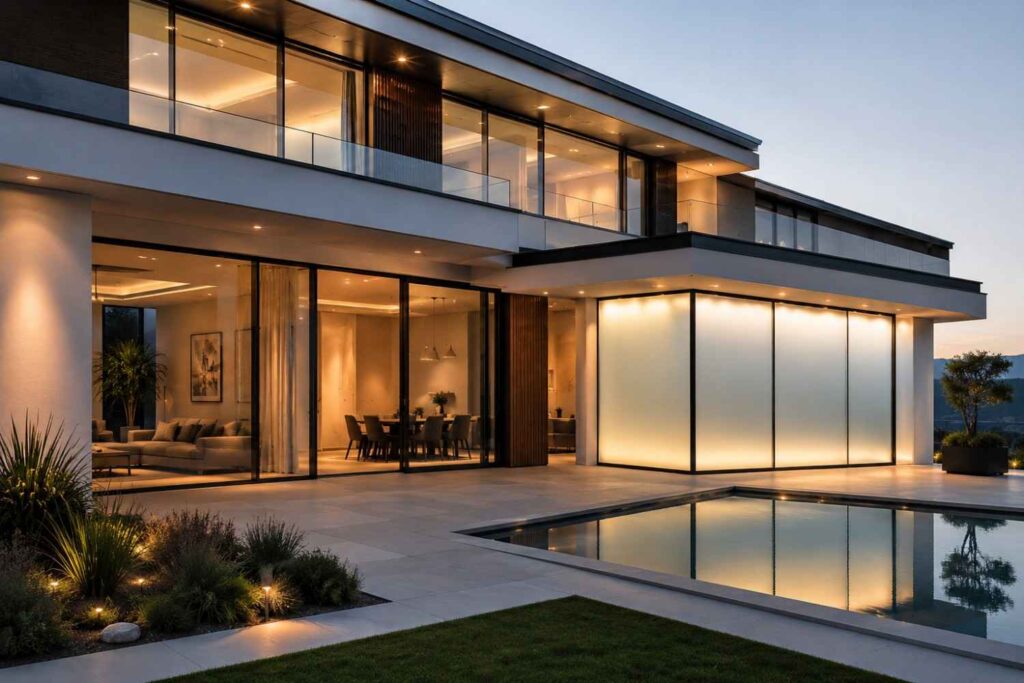
Modern buildings are changing faster than ever, and one of the biggest innovations leading this transformation is smart glass. Architects, homeowners, commercial builders, and interior designers are choosing smart glass because it combines technology with beautiful design. Unlike traditional glass, smart glass offers privacy, energy efficiency, and better comfort without affecting the appearance of a building.
In 2026, smart glass is no longer limited to luxury projects. It is becoming a practical solution for offices, hospitals, hotels, educational institutions, and modern homes. As construction focuses more on sustainability and user comfort, smart glass is becoming an essential part of contemporary architecture. Glasstronn continues to support this growing demand by providing innovative smart glass solutions that meet modern design expectations. Whether it is for residential or commercial spaces, Glasstronn helps create buildings that are stylish, functional, and future-ready.
In this blog, let’s explore the top 10 smart glass trends that are transforming modern architecture in 2026.
1. Smart Glass Becoming a Standard in Modern Homes
Homeowners are increasingly choosing smart glass for living rooms, bedrooms, bathrooms, balconies, and home offices. With just a switch or remote control, transparent glass instantly changes into a private surface.
This eliminates the need for curtains or blinds while maintaining a clean and elegant interior. Smart homes now include automated lighting, climate control, and smart glass as part of a connected living experience.
Benefits include:
- Better privacy
- Elegant interiors
- Natural daylight
- Reduced maintenance
- Improved home value
2. Energy-Efficient Buildings Using Smart Glass
Energy conservation is a major priority in modern construction. Smart glass helps regulate sunlight entering a building, reducing excessive heat during summer while allowing natural light inside.
This helps lower electricity consumption because air conditioners and artificial lighting are used less frequently.
Many green-certified buildings now include smart glass as part of their sustainable design strategy.
Advantages include:
- Lower cooling costs
- Reduced energy bills
- Comfortable indoor temperatures
- Eco-friendly construction
- Improved occupant comfort
3. Offices Choosing Flexible Privacy Solutions
Modern workplaces require spaces that easily adapt to different activities. Conference rooms, executive cabins, meeting areas, and collaborative workspaces now use smart glass instead of permanent walls.
Employees can instantly switch between transparent and opaque modes depending on the meeting or privacy requirement.
This creates open offices without compromising confidentiality.
4. Hospitals Improving Patient Comfort
Healthcare facilities are adopting smart glass to provide hygienic, private, and comfortable environments.
Instead of fabric curtains that collect dust and bacteria, hospitals now use smart glass partitions that are easy to clean and maintain.
Applications include:
- Patient rooms
- Operation theatres
- ICU partitions
- Consultation rooms
- Diagnostic centers
The result is improved cleanliness, better patient privacy, and enhanced healthcare experiences.
5. Hotels Creating Luxury Guest Experiences
Luxury hotels are embracing smart glass to create sophisticated guest rooms and premium suites.
Bathrooms with switchable glass have become one of the most attractive features in modern hospitality design.
Guests enjoy:
- Instant privacy
- Spacious room appearance
- Modern aesthetics
- Better lighting
- Premium experience
Hotels also use smart glass in restaurants, banquet halls, and meeting spaces.
6. Integration with Smart Building Technology
As smart building technology continues to advance, automated smart glass systems are becoming an essential part of modern architecture in 2026, offering greater convenience, energy efficiency, and seamless control.
Smart glass now connects with:
- Voice assistants
- Mobile applications
- Motion sensors
- Smart home systems
- Building management systems
Users can schedule privacy settings, automate glass transitions based on sunlight, or operate everything remotely.
This makes buildings more intelligent and energy-efficient.
7. Decorative Designs with Functional Glass
Architects no longer view smart glass as only a privacy solution.
Today, it is becoming an important decorative element in modern architecture.
Designers use smart glass for:
- Staircase railings
- Interior partitions
- Glass walls
- Luxury bathrooms
- Corporate entrances
The glass enhances the visual appeal while maintaining practical functionality.
Many designers also educate clients about the common myths about switchable film so they can make informed decisions before choosing the right solution.
8. Increased Demand in Commercial Buildings
Shopping malls, airports, educational institutions, banks, and corporate offices are rapidly adopting smart glass technology.
Commercial spaces appreciate its ability to create flexible environments while reducing maintenance costs.
Popular commercial applications include:
- Reception areas
- Meeting rooms
- Executive offices
- Display partitions
- Customer lounges
Its sleek and modern appearance enhances commercial spaces, creating a professional environment that impresses clients, customers, and visitors alike.
9. Better Durability and Improved Technology
The latest generation of smart glass is more durable, responsive, and energy-efficient than previous versions.
Manufacturers have improved:
- Switching speed
- Optical clarity
- Film quality
- Electrical performance
- Long-term reliability
As technology improves, installation becomes easier and maintenance requirements become lower.
Professionals also discuss the common problems in smart glass during planning stages to ensure the right product selection, proper installation, and long-lasting performance.
10. Growing Demand Across Indian Cities
The Indian construction industry is rapidly adopting advanced building materials, and smart glass has become one of the fastest-growing technologies.
Builders, architects, and developers are increasingly including smart glass in premium residential and commercial projects because customers expect modern features with improved energy efficiency.
Many people searching for the best smart glass company in Bangalore also look for experienced providers that offer quality products, expert installation, and reliable after-sales support.
As awareness increases, smart glass is expected to become a common feature in future construction projects across India.
Why Smart Glass Is the Future of Architecture
Modern architecture is no longer only about appearance. Today’s buildings must provide comfort, sustainability, flexibility, and intelligent functionality.
Smart glass successfully combines all these requirements into one solution.
Key advantages include:
- Instant privacy
- Modern appearance
- Better energy efficiency
- Increased property value
- Improved natural lighting
- Reduced dependence on curtains
- Easy maintenance
- Suitable for residential and commercial projects
As technology becomes more affordable, smart glass will continue replacing conventional glass in many applications.
Choosing the Right Smart Glass Solution
Before investing in smart glass, property owners should evaluate several important factors.
Consider:
- Building purpose
- Privacy requirements
- Glass dimensions
- Installation quality
- Electrical requirements
- Warranty support
- Long-term maintenance
Working with experienced professionals ensures proper installation and maximum performance over many years.
Every project has unique requirements, so selecting the right smart glass system plays a major role in achieving the desired results.
FAQs
1. What is smart glass, and how does it work?
Smart glass is an advanced glass technology that changes from transparent to opaque when powered by electricity. It provides instant privacy while allowing users to control light and visibility with a switch, remote, or smart automation system.
2. Where can smart glass be installed?
Smart glass can be installed in homes, offices, hospitals, hotels, conference rooms, bathrooms, retail stores, and commercial buildings. It is suitable for both interior partitions and exterior glazing applications.
3. Is smart glass energy efficient?
Yes. Smart glass helps regulate sunlight and reduces heat entering a building, which can lower the use of air conditioning and artificial lighting. This contributes to improved energy efficiency and reduced electricity costs.
4. Does smart glass require a lot of maintenance?
No. Smart glass is easy to maintain and can be cleaned like regular glass using a soft cloth and a non-abrasive glass cleaner. Proper installation also helps ensure long-lasting performance.
5. Is smart glass a good investment for modern buildings?
Yes. Smart glass enhances privacy, improves aesthetics, increases energy efficiency, and adds value to residential and commercial properties. Its combination of functionality and modern design makes it a smart long-term investment.
Conclusion
Smart glass is transforming the future of architecture by making buildings more intelligent, efficient, and visually attractive. From luxury homes and hospitals to commercial offices and hotels, its applications continue to expand every year. With continuous improvements in technology, smart glass is becoming a practical investment rather than a luxury feature.
As more architects and developers focus on sustainable construction, demand for smart glass solutions will continue growing throughout 2026 and beyond. Glasstronn remains committed to delivering innovative smart glass solutions that support modern architectural designs and evolving customer expectations. Whether designing a new building or upgrading an existing space, Glasstronn provides advanced solutions that combine privacy, style, and performance for the future of smart construction.