Smart glass is becoming one of the most popular innovations in modern architecture and interior design. From luxury homes and corporate offices to hospitals and hotels, this technology is transforming the way people use glass in everyday spaces. Many businesses and homeowners now prefer smart glass because it offers privacy, energy efficiency, and a modern appearance without using traditional curtains or blinds. Companies like Glasstronn are helping customers explore advanced privacy solutions while also showing how switchable glass improves healthcare environments by creating cleaner and more hygienic spaces.
Another reason why smart glass is gaining popularity is because it combines technology with practical benefits. It improves privacy, reduces glare, enhances aesthetics, and helps create flexible spaces. Modern offices use smart glass for conference rooms and cabins, while luxury homes use it in bathrooms, balconies, and living areas. Architects and interior designers also prefer smart glass because it creates open and spacious interiors while maintaining privacy whenever required.
However, like any modern technology, smart glass can also experience certain problems if it is not installed properly or maintained correctly. Many users are unaware of these issues until they face them after installation. Understanding these common problems and their solutions can help users maintain smart glass systems more effectively and avoid expensive repairs in the future.
What is Smart Glass?
Smart glass is an electrically operated glass system that changes its appearance based on power supply. When electricity flows through the glass, it becomes clear and transparent. When the power is turned off, the glass turns frosted or opaque, creating privacy instantly.
This technology is commonly used in:
- Office partitions
- Conference rooms
- Luxury homes
- Bathrooms
- Hospitals
- Hotels
- Retail stores
- Showrooms
Smart glass is considered a modern replacement for curtains, blinds, and traditional frosted glass because it offers a cleaner and more sophisticated look.
Why Smart Glass is Trending
Smart glass is trending because people now prefer smarter, more functional interiors. Modern architecture focuses on clean designs, open spaces, and minimalistic interiors. Smart glass perfectly supports these trends by combining privacy and aesthetics in one solution.
Some major reasons behind its growing demand include:
- Instant privacy control
- Modern interior appearance
- Energy efficiency
- Smart automation compatibility
- Better use of natural light
- Reduced need for curtains or blinds
- Improved workplace aesthetics
Businesses are also using smart glass to create premium office environments that look modern and professional. In residential spaces, homeowners appreciate the convenience and futuristic feel that smart glass provides.
Common Problems in Smart Glass and How to Fix Them
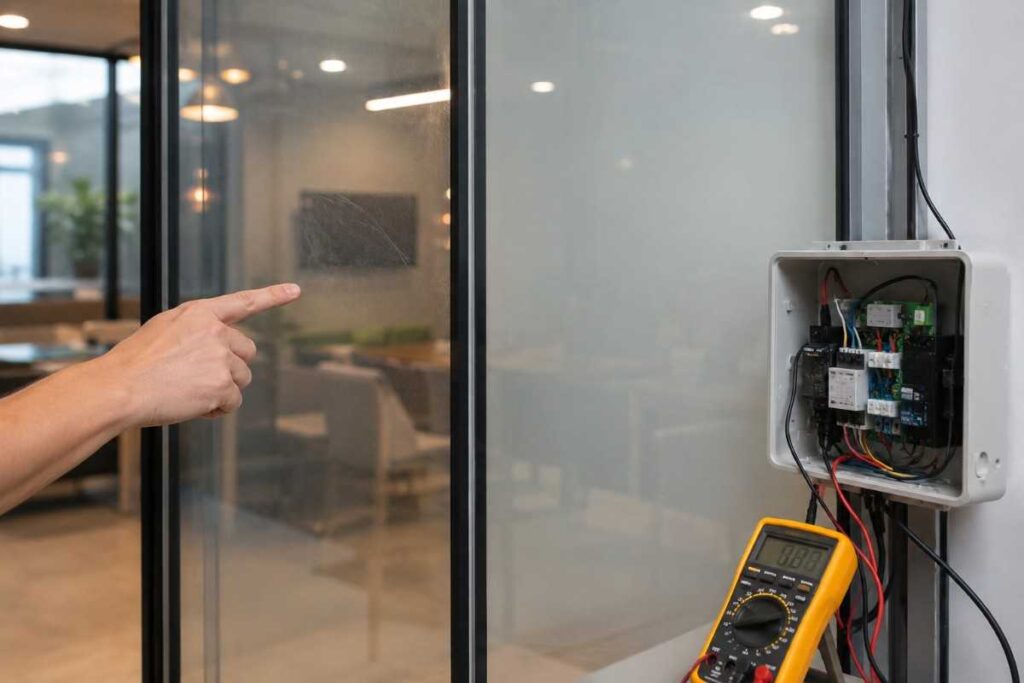
1. Smart Glass Not Turning Transparent
One of the most common issues users face is when the smart glass does not switch from opaque to transparent mode properly.
Possible Causes
- Power supply failure
- Loose electrical connections
- Faulty transformer
- Wiring issues
How to Fix It
- Check if the power source is working correctly.
- Inspect all wiring connections carefully.
- Replace damaged transformers if necessary.
- Contact professional technicians for electrical inspection.
Regular electrical maintenance can prevent this issue from happening frequently.
2. Uneven Transparency on the Glass
Sometimes smart glass becomes partially transparent while certain areas remain cloudy or frosted.
Possible Causes
- Low-quality installation
- Uneven electrical current
- Damaged PDLC film
- Manufacturing defects
How to Fix It
- Ensure installation is done by experienced professionals.
- Replace damaged smart film if required.
- Use high-quality power supply systems.
- Avoid using low-grade smart glass materials.
Choosing premium products significantly reduces this type of problem.
3. Delayed Switching Speed
Some users notice that the glass takes longer than usual to change from opaque to transparent.
Possible Causes
- Aging components
- Voltage fluctuations
- Poor electrical systems
- Low-quality controllers
How to Fix It
- Use stable power systems.
- Replace outdated controllers.
- Maintain recommended voltage levels.
- Perform periodic inspections.
Proper maintenance helps maintain fast switching performance.
4. Smart Glass Producing Noise
Although smart glass is generally silent, electrical buzzing sounds may occur in certain situations.
Possible Causes
- Transformer problems
- Electrical interference
- Low-quality electrical accessories
How to Fix It
- Replace noisy transformers.
- Use certified electrical components.
- Ensure proper grounding during installation.
Professional installation plays a major role in avoiding these issues.
5. Scratches and Surface Damage
Smart glass surfaces can develop scratches if cleaned improperly or exposed to sharp objects.
Possible Causes
- Rough cleaning materials
- Improper maintenance
- Accidental impacts
How to Fix It
- Use soft microfiber cloths for cleaning.
- Avoid abrasive chemicals.
- Protect glass from heavy impact.
- Use recommended glass cleaning solutions.
Good maintenance improves the lifespan and appearance of smart glass.
6. Smart Film Peeling from Glass
In smart film installations, peeling edges can become a common issue over time.
Possible Causes
- Poor adhesive quality
- Moisture exposure
- Incorrect installation methods
How to Fix It
- Install smart film in controlled environments.
- Use high-quality adhesive products.
- Ensure professional installation.
This problem is more common in low-cost installations.
7. Power Consumption Concerns
Some users worry that smart glass may increase electricity bills.
Reality
Smart glass actually consumes relatively low power compared to many electrical appliances. Additionally, smart glass helps reduce heat inside buildings by controlling sunlight and minimizing excessive indoor temperature rise.
How to Improve Efficiency
- Turn off transparency mode when not required.
- Use automation systems for better energy control.
- Install energy-efficient transformers.
Energy savings can become noticeable in large commercial buildings.
8. Smart Glass Not Working After Power Failure
After electrical interruptions, some systems may fail to operate properly.
Possible Causes
- Power surges
- Controller damage
- System overload
How to Fix It
- Install surge protectors.
- Restart the control system.
- Replace damaged electrical components.
Backup power systems can also help maintain smooth performance.
9. High Installation Costs
One of the biggest concerns for customers is the initial cost of smart glass installation.
Why It Happens
- Advanced technology
- Specialized manufacturing
- Professional installation requirements
How to Manage Costs
- Compare different smart glass options.
- Choose solutions based on actual requirements.
- Invest in long-term quality instead of low-cost alternatives.
Although installation costs may seem high initially, smart glass provides long-term value through aesthetics, privacy, and energy efficiency.
10. Difficulty in Maintenance
Some people assume smart glass requires complicated maintenance procedures.
Reality
Smart glass maintenance is actually simple if proper cleaning methods are followed.
Maintenance Tips
- Clean regularly using soft cloths.
- Avoid water leakage near electrical areas.
- Inspect wiring periodically.
- Schedule professional maintenance checks annually.
Simple care can help smart glass function effectively for many years.
Importance of Professional Installation
Many smart glass problems happen because of improper installation rather than product defects. Electrical systems, transformers, and wiring must be installed carefully to ensure smooth operation.
Professional installation helps:
- Prevent electrical issues
- Improve switching performance
- Increase product lifespan
- Reduce maintenance costs
- Ensure better safety
Experienced installers also understand how to handle smart film alignment, electrical setup, and automation integration properly.
How to Choose the Right Smart Glass Solution
Before purchasing smart glass, customers should evaluate:
- Product quality
- Warranty support
- Installation expertise
- Power requirements
- Application suitability
- Maintenance services
Many businesses now search for the best switchable glass company in Bangalore to ensure they receive quality products along with reliable installation and support services.
Choosing trusted suppliers helps reduce long-term operational issues.
Future of Smart Glass Technology
The future of smart glass looks extremely promising. As smart buildings and automated interiors become more common, demand for smart glass is expected to grow rapidly in India and worldwide.
Future developments may include:
- Voice-controlled smart glass
- AI-integrated glass systems
- Improved energy-saving technologies
- Advanced transparency control
- Smart home integration
Architects, interior designers, and businesses are already adopting smart glass solutions for modern construction projects.
FAQs
1. What is smart glass and how does it work?
Smart glass is a special type of glass that changes from transparent to opaque using electricity. It uses advanced technologies like PDLC systems to provide instant privacy with a switch or remote control.
2. What are the common problems faced in smart glass?
Some common smart glass problems include delayed switching, uneven transparency, electrical connection issues, smart film peeling, and surface scratches. Most of these issues can be solved with proper installation and maintenance.
3. Does smart glass consume a lot of electricity?
No, smart glass usually consumes low power. In many commercial buildings and homes, it can even help improve energy efficiency by reducing heat and controlling sunlight.
4. How long does smart glass last?
High-quality smart glass can last for many years when maintained properly. Regular cleaning and professional servicing help increase its lifespan and performance.
5. Is smart glass suitable for homes and offices?
Yes, smart glass is widely used in homes, offices, hospitals, hotels, conference rooms, bathrooms, and commercial buildings because it provides privacy, modern aesthetics, and convenience.
Conclusion
Smart glass is changing the way modern spaces are designed and used. It offers privacy, elegance, energy efficiency, and advanced functionality that traditional glass solutions cannot provide. While there can be some common issues like electrical failures, delayed switching, or installation problems, most of these challenges can be avoided through proper maintenance and professional installation.
As technology continues to improve, smart glass will become even more efficient and accessible for homes, offices, hospitals, hotels, and commercial spaces. Companies like Glasstronn are contributing to this growing industry by offering modern smart glass solutions that combine technology with stylish architectural design. With the right installation and maintenance approach, smart glass can remain a reliable and valuable investment for many years.