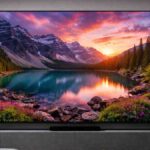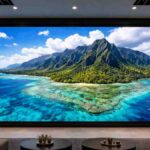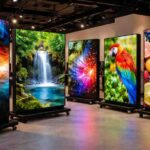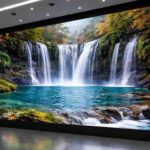
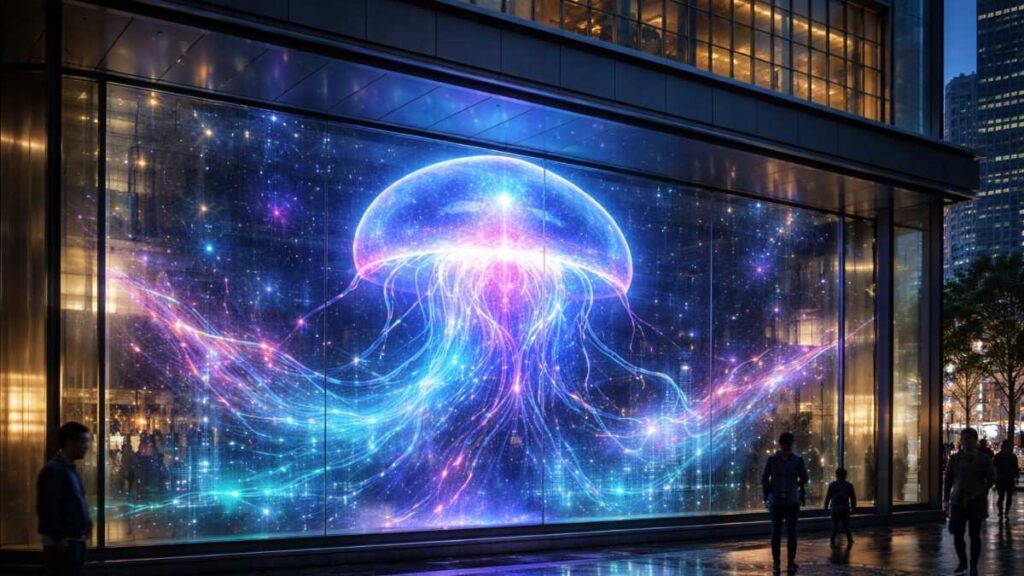
Visual communication is evolving faster than ever. Brands, architects, and businesses today want displays that don’t just show information but stop people in their tracks. Flat screens are slowly giving way to immersive visual experiences that feel futuristic, lightweight, and integrated into architecture. This is where holographic LED film is redefining how visuals interact with space. Glasstronn works with designers, commercial brands, and developers to bring next-generation display technology into real-world environments. By merging transparency with motion and light, Glasstronn enables visuals that feel almost three-dimensional — without bulky hardware or heavy structures.
This blog explains how holographic LED film works, how it creates striking 3D-like effects, and why it’s becoming a preferred solution for modern architectural and commercial spaces.
Why Visual Displays Are Moving Beyond Traditional Screens
Traditional LED screens and video walls have limitations. They require solid backdrops, take up space, and often block light or visibility. As architecture becomes more open and glass-driven, displays need to adapt.
Modern spaces demand displays that:
- Feel lightweight and transparent
- Integrate with glass and open structures
- Create depth and motion without physical bulk
- Enhance architecture instead of overpowering it
Holographic LED film answers these demands perfectly.
Holographic LED Film and the Science Behind the Illusion
Holographic LED film works by embedding micro-LEDs into a transparent film that can be applied directly onto glass surfaces. These LEDs emit light in a way that allows content to appear floating in mid-air.
What creates the 3D-like effect is:
- High transparency that removes visible background barriers
- Precise LED spacing for depth perception
- Bright contrast between content and surrounding space
- Motion-based visuals that trick the human eye
The result is not a true hologram, but a powerful illusion of depth and dimension.
How Transparency Enhances the 3D Effect
The key to visual magic lies in transparency. When visuals are displayed without a solid backing, the human brain interprets them differently.
Transparent displays create:
- A floating appearance for visuals
- Separation between content and structure
- A sense of depth as background remains visible
- Enhanced realism when combined with motion
This makes images feel alive rather than screen-bound.
Role of Motion and Animation in Creating Depth
Static images rarely create strong 3D perception. Motion plays a crucial role in holographic LED film displays.
Depth is enhanced through:
- Layered animations
- Parallax motion effects
- Gradual scaling and perspective shifts
- Strategic use of light and shadow
Well-designed content dramatically amplifies the illusion.
Why Glass Surfaces Are Ideal for Holographic Displays
Glass has become a dominant architectural material in modern buildings. Holographic LED film leverages this trend instead of fighting it.
It works exceptionally well on:
- Storefront glass
- Corporate lobby facades
- Showroom windows
- Exhibition partitions
Glass provides the perfect transparent canvas for floating visuals.
Applications in Retail and Brand Showcases
Retail environments thrive on attention. Holographic LED film transforms shopfronts into dynamic storytelling platforms.
Retail benefits include:
- Eye-catching window displays
- Floating product visuals
- Daytime visibility without blocking interiors
- Night-time brand illumination
Stores gain visibility without sacrificing openness.
Corporate Offices and Lobbies
In corporate environments, brand image and innovation matter. Holographic displays create a futuristic first impression.
Common uses include:
- Lobby branding walls
- Corporate storytelling displays
- Product launches and announcements
- Architectural feature elements
The space feels advanced, not cluttered.
Events, Exhibitions, and Trade Shows
Temporary installations benefit greatly from lightweight and flexible display solutions.
Holographic LED film is ideal because it offers:
- Easy installation on glass structures
- Minimal framework requirements
- High visual impact in limited space
- Quick content updates
This makes it perfect for experiential marketing.
Why These Displays Feel More Immersive Than Screens
Traditional screens are clearly defined objects. Holographic LED film removes that boundary.
Immersion increases because:
- Content appears suspended in space
- The display blends into surroundings
- Viewers focus on visuals, not hardware
- The environment becomes part of the experience
This creates stronger emotional engagement.
Brightness and Visibility Without Visual Bulk
Despite being transparent, holographic LED film offers impressive brightness.
Key performance features include:
- High luminance even in daylight
- Clear visibility from multiple angles
- Adjustable brightness based on environment
- No need for dark backgrounds
This balance is difficult to achieve with conventional displays.
Installation Without Major Structural Changes
One of the biggest advantages is ease of integration. These films don’t require heavy frames or walls.
Installation benefits include:
- Direct application on existing glass
- Lightweight structure
- Minimal downtime
- Clean and reversible setup
This makes them suitable for both new builds and retrofits.
Durability and Long-Term Performance
Despite their delicate appearance, holographic LED films are designed for real-world use.
They offer:
- Stable LED performance
- Resistance to indoor environmental conditions
- Long operational life
- Low maintenance requirements
This reliability supports long-term installations.
Content Strategy Makes or Breaks the Effect
The technology alone doesn’t create the magic — content does. Poorly designed visuals reduce impact.
Effective holographic content includes:
- Minimal backgrounds
- Strong contrast
- Smooth motion transitions
- Depth-focused animation design
Content should enhance transparency, not fight it.
Manufacturing Quality and Industry Trust
Projects using advanced display glass often rely on top holographic LED film suppliers to ensure safety, precision, and durability.
Strong manufacturing standards ensure:
- Optical clarity
- Uniform LED performance
- Structural compatibility with glass
- Professional technical support
Quality matters as much as innovation.
Energy Efficiency and Sustainability
Compared to bulky LED walls, holographic LED film can be more efficient.
Sustainability advantages include:
- Reduced material usage
- Lower structural load
- Optimised power consumption
- Better daylight integration
Modern display design aligns with responsible building practices.
Creative Freedom for Designers and Architects
Designers value solutions that don’t limit creativity. Holographic LED film offers exceptional flexibility.
It allows:
- Invisible displays when switched off
- Creative placement on unconventional surfaces
- Seamless integration with architecture
- Minimal disruption to design intent
Technology becomes invisible until activated.
Blending Physical Space With Digital Storytelling
Holographic LED film blurs the line between physical architecture and digital media.
This enables:
- Floating product visuals
- Interactive brand storytelling
- Dynamic environmental graphics
- Experiential customer journeys
Spaces become communicative, not static.
Complete Guide to Use Holographic LED Film in Real Spaces
Understanding the complete guide to use holographic LED film involves knowing where it works best and how to deploy it effectively.
Key considerations include:
- Choosing glass with proper transparency
- Designing motion-focused content
- Planning visibility angles
- Aligning brightness with ambient light
Strategic planning maximises visual impact.
Future of Transparent Display Technology
As architecture becomes more minimal and technology more integrated, transparent displays will become standard.
Future trends point toward:
- Wider adoption in retail and offices
- Deeper integration with smart buildings
- More realistic depth simulations
- Greater content interactivity
The future of displays is invisible until it’s alive.
Why Businesses Are Adopting This Technology
Companies adopt holographic LED film not just for novelty, but for strategic value.
They gain:
- Higher brand recall
- Premium visual differentiation
- Space-efficient display solutions
- Stronger customer engagement
It’s a business decision as much as a design one.
Enhancing Human Attention in a Noisy World
In environments filled with visual noise, subtle floating visuals stand out more than loud screens.
Holographic LED film:
- Draws attention naturally
- Avoids visual fatigue
- Feels futuristic and refined
- Creates memorable impressions
Less hardware, more impact.
Frequently Asked Questions (FAQs)
1. Is holographic LED film a real hologram?
It creates a 3D-like visual illusion, not a true volumetric hologram.
2. Can it be installed on existing glass?
Yes, it is designed for application on existing glass surfaces.
3. Does it block visibility through glass?
No, transparency is maintained while visuals are displayed.
4. Is it suitable for indoor use only?
It is primarily used indoors but can be adapted for semi-controlled environments.
5. How is content updated on holographic LED film?
Content is digitally controlled and can be updated easily.
Conclusion
Holographic LED film is changing how visuals exist within architecture — shifting from bulky screens to floating digital experiences. By combining transparency, motion, and light, it creates a powerful illusion of depth that captures attention without overwhelming space. Glasstronn focuses on delivering advanced display solutions that respect architectural design while unlocking new storytelling possibilities. Through thoughtful integration and high-quality execution, Glasstronn – holographic LED film suppliers in India, helps brands and spaces move beyond flat visuals into a future where digital content feels alive, immersive, and seamlessly woven into the built environment.