In today’s fast-evolving digital world, display technologies are transforming the way businesses communicate, advertise, and engage with their audience. One of the most innovative solutions gaining massive attention is the transparent led display, a technology that seamlessly blends digital visuals with real-world environments. Unlike traditional bulky screens, these displays offer a unique combination of clarity, transparency, and high-impact visuals, making them ideal for modern architecture and commercial applications.
Brands like Glasstronn are at the forefront of this transformation, delivering advanced display solutions that integrate perfectly with glass structures and contemporary designs. As businesses increasingly focus on aesthetics along with functionality, the demand for transparent display solutions continues to rise. Whether it’s a luxury retail store, a corporate office, or a high-end showroom, the ability to display content without blocking visibility has become a game-changer.
The shift toward minimalistic and smart design has further accelerated the adoption of this technology. Transparent LED displays not only enhance visual appeal but also create immersive experiences that capture attention without overwhelming the space. With innovative offerings from Glasstronn, businesses can now achieve a perfect balance between digital communication and architectural elegance.
What is a Transparent LED Display?
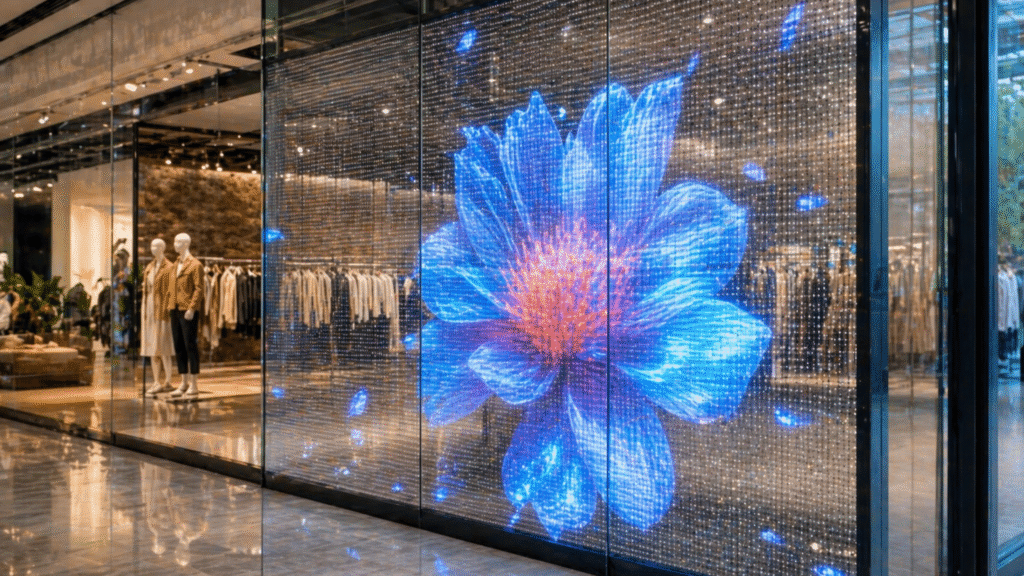
A transparent LED display is an advanced digital screen technology designed to allow light and visibility through it while simultaneously displaying dynamic content such as images, videos, and animations. Unlike conventional LED displays that completely block the background, these screens are engineered with a unique structure that enables partial or high transparency.
This is achieved through a grid-like arrangement of LED strips with intentional spacing between them. These gaps allow viewers to see through the display, making it ideal for installation on glass walls, windows, and facades. When the display is turned off, it becomes almost invisible, maintaining the natural look of the space. When turned on, it transforms into a vibrant digital canvas capable of delivering stunning visuals.
The innovation lies in its ability to merge technology with design. Instead of acting as a barrier, the display becomes a part of the structure itself, enhancing the overall environment rather than disrupting it.
How Do Transparent LED Displays Work?
Transparent LED displays function through a carefully engineered arrangement of LEDs mounted on slim, lightweight panels. These LEDs are spaced in such a way that they create a transparent effect while still maintaining sufficient density to produce clear and bright visuals.
When content is played, the LEDs illuminate in a synchronized manner to form images and videos. The transparent sections remain unaffected, allowing natural light and visibility to pass through. This creates a layered visual effect where digital content appears to float within the physical space.
Advanced control systems manage brightness, contrast, and color accuracy, ensuring that the display performs well even in high ambient lighting conditions. This makes the technology suitable for both indoor and outdoor environments, including areas exposed to direct sunlight.
Key Advantages of Transparent LED Displays
High Transparency and Aesthetic Appeal
One of the most defining features of transparent LED displays is their ability to maintain visual openness. In environments where design and visibility are crucial, such as glass buildings or premium retail outlets, these displays enhance the space without obstructing views. They contribute to a sleek, modern aesthetic that aligns with contemporary architectural trends.
Lightweight and Space-Efficient Design
Traditional LED screens often require heavy mounting structures and significant space. In contrast, transparent LED displays are lightweight and designed for seamless integration with existing glass surfaces. This reduces the need for additional structural support and allows for more flexible installation options.
Energy Efficiency and Sustainability
Due to their design and efficient use of LED technology, transparent displays consume less power compared to conventional screens. They also generate less heat, which contributes to lower cooling requirements. This makes them an environmentally friendly choice for businesses aiming to reduce their energy footprint.
High Brightness and Visibility
Despite their transparent nature, these displays are capable of producing high brightness levels, ensuring that content remains clearly visible even in environments with strong ambient light. This is one of the key reasons why many businesses consider them the best transparent led display solution for both indoor and outdoor applications.
Ease of Maintenance
The modular design of transparent LED displays allows for easy maintenance and servicing. Individual panels can be accessed and replaced without dismantling the entire system, reducing downtime and maintenance costs.
Enhanced Engagement and Visual Impact
The unique visual effect created by transparent displays naturally captures attention. The combination of real-world background and digital content creates an immersive experience that is far more engaging than traditional displays.
Main Functions of Transparent LED Displays
Advertising and Branding
Transparent LED displays are widely used as powerful advertising tools. Their ability to present dynamic content without blocking the view of products behind them makes them ideal for storefronts and showrooms. Businesses can showcase promotions while still allowing customers to see physical products.
Information Display
These displays are also used to communicate important information such as announcements, schedules, and updates. Their clarity and visibility ensure that messages are easily noticed and understood.
Architectural Enhancement
Beyond functionality, transparent LED displays serve as design elements that enhance the visual appeal of buildings and interiors. They add a futuristic touch, making spaces look more innovative and technologically advanced.
Entertainment and Event Applications
In events, exhibitions, and concerts, transparent displays are used to create stunning visual effects. They can be integrated into stage designs to produce layered visuals that interact with performers and surroundings.
Retail Experience Enhancement
Retailers use transparent displays to create immersive shopping experiences. By combining digital content with physical displays, they can attract customers and influence purchasing decisions more effectively.
Applications Across Industries
Transparent LED displays have found applications across a wide range of industries due to their versatility and adaptability.
In retail, they are used to enhance storefronts and attract foot traffic. In corporate environments, they serve as modern communication tools and design elements. Hospitality businesses such as hotels and restaurants use them to create visually appealing interiors. Transportation hubs like airports and metro stations utilize them for information display and advertising. Event organizers and exhibition planners rely on them to create engaging and memorable experiences.
Transparent LED vs Traditional LED Displays
When compared to traditional LED displays, transparent LED technology offers several distinct advantages. Traditional screens are bulky and completely block visibility, making them less suitable for modern design-focused environments. Transparent displays, on the other hand, provide a balance between functionality and aesthetics.
They are lighter, easier to install, and more energy-efficient. Most importantly, they enhance the environment rather than dominating it, making them a preferred choice for contemporary applications.
Factors to Consider Before Choosing Transparent LED Displays
Selecting the right transparent LED display requires careful consideration of several factors. Pixel pitch plays a crucial role in determining image clarity, especially for close viewing distances. Transparency level should be chosen based on how much visibility is required through the display.
Brightness is another important factor, particularly for outdoor installations or areas with strong lighting. The installation environment, whether indoor or outdoor, will influence the type of display needed. Budget and long-term maintenance requirements should also be taken into account to ensure a cost-effective investment.
Future Trends of Transparent LED Displays
The future of transparent LED technology is promising, with continuous advancements expected in both performance and application.
Integration with smart glass is one of the most exciting developments, allowing displays to become even more seamless and interactive. The rise of smart cities is also driving demand for innovative display solutions that combine information delivery with design.
Improved resolution, better energy efficiency, and advanced content management systems will further enhance the capabilities of transparent LED displays. As businesses continue to seek unique ways to stand out, this technology will play a key role in shaping the future of visual communication.
You can also explore how similar innovations are influencing design trends by reading “Why is Glass with LED Inside Becoming Popular in Modern Design”, which highlights the growing importance of integrated LED technologies in modern architecture.
FAQs
1. What makes transparent LED displays different from traditional displays?
Transparent LED displays allow visibility through the screen while displaying content, unlike traditional displays that block the background completely.
2. Are transparent LED displays suitable for all environments?
Yes, they can be used in both indoor and outdoor settings, provided the right specifications are chosen.
3. How durable are transparent LED displays?
They are designed to be durable and reliable, with strong materials that can withstand various environmental conditions.
4. Can transparent LED displays be customized?
Yes, they can be tailored in terms of size, shape, and resolution to suit specific requirements.
5. Do these displays require frequent maintenance?
No, their modular design makes maintenance simple and cost-effective.
Conclusion
Transparent LED displays are redefining the way digital content is presented in physical spaces. By combining advanced technology with elegant design, they offer a solution that meets both functional and aesthetic needs.
From advertising and branding to architectural enhancement and entertainment, their applications are vast and continuously expanding. Businesses that adopt this technology can create more engaging, visually appealing, and future-ready environments.
With trusted solutions from Glasstronn, organizations can confidently embrace this innovation and transform their spaces into dynamic and interactive experiences. Choosing Glasstronn ensures not only high-quality products but also expert support in achieving the best possible results.
If you’re planning to upgrade your space with modern display technology, Contact Now Glasstronn provides expert consultation and customized solutions tailored to your specific needs. From design to installation, every step is handled with precision to ensure maximum impact and performance.