Modern architecture is no longer just about walls, doors, and windows — it’s about flexibility, adaptability, and intelligent use of materials. As spaces become more dynamic and multifunctional, traditional fixed materials often fall short. This is where switchable smart glass has emerged as a powerful solution, allowing spaces to instantly shift between openness and privacy. Glasstronn works closely with architects, interior designers, businesses, and homeowners to integrate advanced glass solutions that align with modern living and working needs. By blending technology with design, Glasstronn helps spaces evolve beyond static boundaries into responsive environments.
This blog explores where switchable smart glass is commonly used, why it’s gaining popularity across industries, and how it supports both functional and aesthetic goals in a wide range of applications.
Why Smart Glass Is Becoming a Design Essential
Spaces today need to do more with less. Offices double as collaboration hubs, homes integrate work and leisure, and commercial environments aim to impress while remaining practical. Smart glass supports these evolving demands.
Its growing adoption is driven by the need for:
- Flexible privacy control
- Clean, minimal aesthetics
- Better use of natural light
- Technology-integrated design
Rather than adding elements like curtains or blinds, smart glass becomes part of the architecture itself.
Switchable Smart Glass and How It Works in Real Spaces
Switchable smart glass allows transparent surfaces to turn opaque instantly using electrical current. This simple shift unlocks a wide range of possibilities across different environments.
In practical use, it offers:
- Privacy on demand
- Clear visibility when needed
- Seamless surface transitions
- Minimal visual disruption
This adaptability makes it suitable for far more than just windows.
Corporate Offices and Workspaces
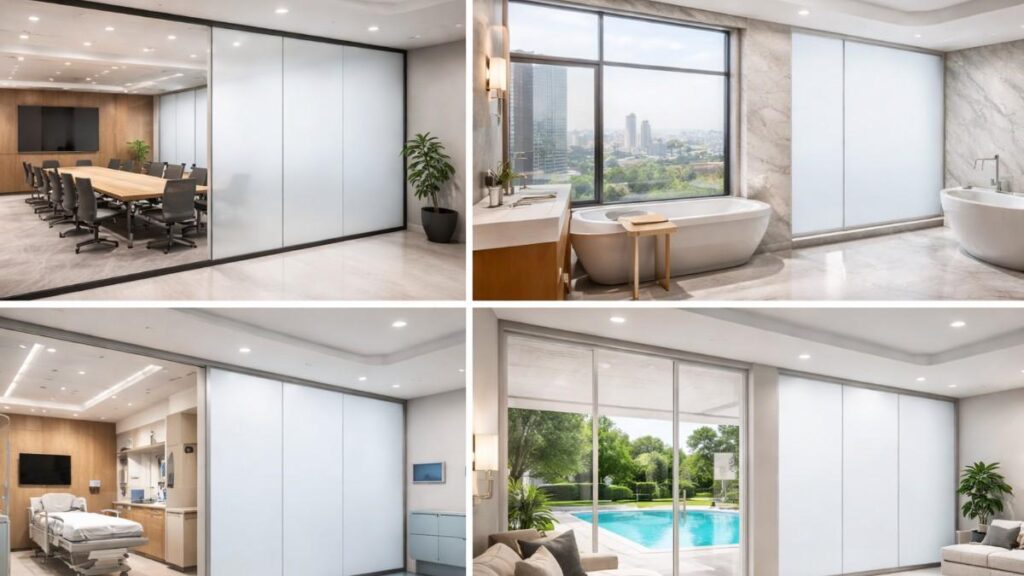
Corporate offices were among the earliest adopters of smart glass. Modern workplaces prioritise transparency, collaboration, and flexibility, making smart glass a natural fit.
Common office applications include:
- Conference room partitions
- Executive cabin walls
- Meeting rooms requiring instant privacy
- Glass facades with controlled visibility
It allows offices to stay open and collaborative while maintaining confidentiality when required.
Commercial Lobbies and Reception Areas
First impressions matter in commercial spaces. Lobbies are designed to feel open, premium, and welcoming.
Smart glass enhances lobbies by:
- Displaying a transparent, high-end look
- Providing privacy for reception desks when needed
- Supporting branding and visual storytelling
- Preserving openness and light flow
It elevates the visual experience without adding clutter.
Hospitals and Healthcare Facilities
Healthcare environments require strict privacy without compromising hygiene or light.
Smart glass is widely used in:
- Patient rooms
- ICU partitions
- Diagnostic areas
- Consultation rooms
Its benefits in healthcare include:
- Instant privacy for patients
- Easy cleaning compared to curtains
- Reduced infection risks
- Better patient comfort
Function and safety work together seamlessly.
Hotels and Hospitality Spaces
Luxury hotels focus on experience, comfort, and visual appeal. Smart glass aligns perfectly with these goals.
In hospitality settings, it is used for:
- Bathroom partitions in hotel rooms
- Spa and wellness areas
- Conference halls
- Premium suites
It creates a high-end, futuristic feel while improving guest experience.
Residential Homes and Apartments
Homes are increasingly adopting smart glass as lifestyles evolve. Open layouts are popular, but privacy is still essential.
Residential applications include:
- Bathroom partitions
- Bedroom-bathroom separations
- Home offices
- Walk-in wardrobes
Smart glass allows homes to feel spacious while remaining practical.
Luxury Villas and High-End Residences
In luxury homes, design is about seamless transitions and refined details. Smart glass supports this philosophy.
It is commonly used in:
- Pool-facing walls
- Spa and sauna areas
- Private lounges
- Large glass facades
The ability to control transparency enhances exclusivity and comfort.
Retail Showrooms and Commercial Displays
Retail environments aim to attract attention while controlling visibility.
Smart glass is used in:
- Storefronts
- Display windows
- Trial rooms
- VIP customer areas
Retailers benefit from dynamic visibility and a modern brand image.
Educational Institutions and Training Centers
Educational spaces need flexibility for teaching, presentations, and discussions.
Smart glass applications include:
- Classrooms with glass partitions
- Seminar halls
- Faculty rooms
- Research labs
It allows quick transitions between open learning and focused sessions.
Airports and Transportation Hubs
High-traffic public spaces demand durable and efficient design solutions.
Smart glass is increasingly seen in:
- Airport lounges
- Security zones
- VIP waiting areas
- Control rooms
Its ability to offer privacy without physical barriers is a major advantage.
Government and High-Security Facilities
Security-sensitive environments benefit greatly from smart glass.
Applications include:
- Control rooms
- Interview and interrogation spaces
- Observation areas
- Confidential meeting rooms
Instant privacy control enhances security without permanent obstructions.
Smart Homes and Automation-Driven Spaces
As homes become smarter, materials are expected to integrate with automation systems.
Smart glass fits into:
- Voice-controlled environments
- Automated lighting and climate systems
- App-based home controls
This creates a cohesive smart living experience.
Architectural Glass and Modern Facades
Modern architecture relies heavily on glass for light and openness.
Smart glass enhances facades by:
- Managing visibility without blocking light
- Supporting energy-efficient design
- Adding futuristic appeal
- Reducing need for external shading systems
It makes buildings more responsive to their environment.
Manufacturing Quality and Industry Trust
When adopting advanced glass solutions, quality matters. Many architects and developers look for partners associated with the best switchable smart glass company in India to ensure performance, safety, and long-term reliability.
High manufacturing standards ensure:
- Consistent optical clarity
- Reliable switching performance
- Structural integrity
- Professional installation support
This builds confidence across projects of all scales.
Maintenance and Everyday Practicality
Despite its advanced technology, smart glass remains easy to maintain.
Key practical advantages include:
- Simple cleaning like regular glass
- No fabric or mechanical components
- Long operational lifespan
- Stable performance under frequent use
This makes it suitable for high-use environments.
Sustainability and Energy Efficiency
Smart glass contributes to sustainable design by supporting natural light and reducing reliance on artificial solutions.
Sustainability benefits include:
- Better daylight utilisation
- Reduced lighting energy consumption
- Support for green building standards
- Cleaner, minimalist interiors
Efficiency and aesthetics go hand in hand.
Adaptability Across Industries
One of the strongest advantages of smart glass is its versatility.
It adapts easily to:
- Residential needs
- Commercial branding
- Healthcare privacy
- Hospitality luxury
- Public infrastructure
Few materials offer this level of cross-industry relevance.
Design Freedom Without Permanent Commitment
Traditional privacy solutions are fixed and restrictive. Smart glass offers reversible, flexible design.
This allows:
- Spaces to change function instantly
- Designers to maintain visual continuity
- Users to control their environment
- Interiors to evolve over time
Flexibility defines modern design.
The Future of Privacy Glass in Built Environments
Understanding the future of privacy glass means recognising the shift toward responsive architecture. Buildings are no longer static — they react to users and conditions.
Future-focused trends include:
- Increased smart glass adoption
- Integration with AI and automation
- Wider use in residential spaces
- Greater emphasis on minimalism and flexibility
Privacy glass is becoming a standard, not a novelty.
Why Designers and Architects Prefer Smart Glass
Design professionals value materials that offer both function and form.
Smart glass is preferred because it:
- Reduces visual clutter
- Enhances spatial quality
- Supports creative freedom
- Aligns with modern design philosophies
It simplifies design while adding sophistication.
Enhancing Human Experience Through Smart Materials
At its core, smart glass improves how people experience spaces.
It contributes to:
- Comfort and control
- Visual openness
- Emotional well-being
- A sense of modern living
Design becomes more human-centric.
Frequently Asked Questions (FAQs)
1. Is switchable smart glass suitable for residential use?
Yes, it is widely used in homes for bathrooms, offices, and partitions.
2. Does smart glass provide complete privacy?
When switched to opaque mode, it offers full visual privacy.
3. Can smart glass be installed in existing buildings?
Yes, it can be retrofitted into both old and new structures.
4. Is smart glass difficult to maintain?
No, it is maintained like standard glass with regular cleaning.
5. Can smart glass integrate with automation systems?
Yes, it works well with smart home and building automation.
Conclusion
Switchable smart glass is redefining how spaces function across industries — from homes and offices to hospitals, hotels, and public infrastructure. Its ability to balance openness with privacy makes it one of the most versatile materials in modern architecture. Glasstronn – switchable smart glass suppliers in India, focuses on delivering high-quality smart glass solutions that integrate seamlessly into diverse environments. By combining innovation, reliability, and design sensitivity, Glasstronn is helping shape spaces that are more flexible, efficient, and aligned with the evolving demands of modern living and working.