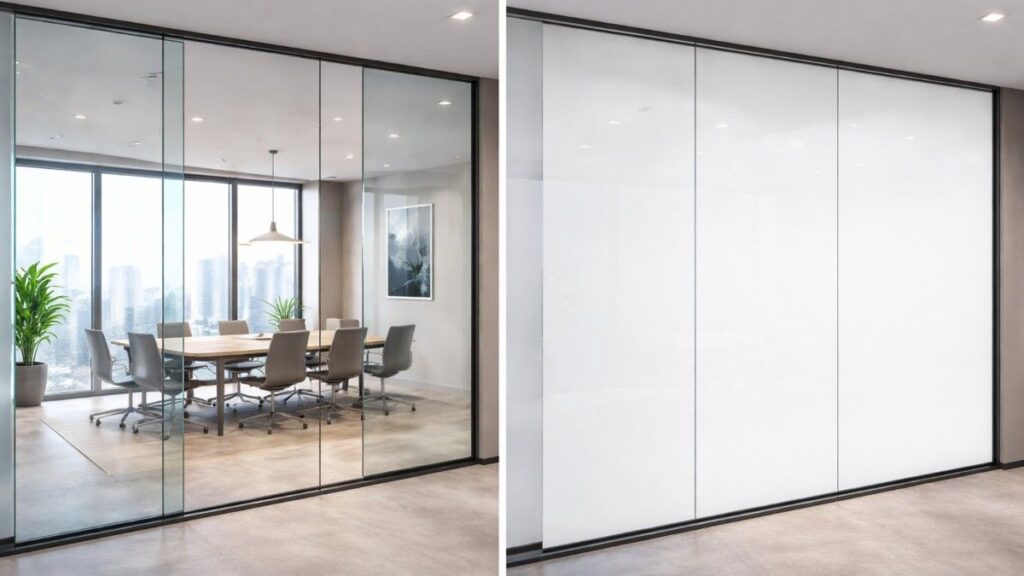
Smart materials are reshaping how modern spaces function, but with innovation often comes misunderstanding. Switchable film is one such technology that adds flexibility, privacy, and elegance to interiors, yet many misconceptions still surround it. Glasstronn works closely with architects, designers, and project owners to integrate advanced glass solutions into real-world environments, and through this experience, certain myths come up again and again. To make informed decisions, it’s important to separate fact from fiction. This blog breaks down the most common myths about switchable film and explains what actually holds true in real applications.
Why Switchable Film Is Often Misunderstood
Switchable film sits at the intersection of glass, electronics, and interior design. Because it’s not a traditional building material, people often rely on assumptions rather than facts.
Some common reasons myths exist include:
- Lack of firsthand exposure
- Confusion between smart glass and smart film
- Outdated information from early versions of the technology
- Assumptions based on cost or complexity
Understanding how the technology has evolved helps clear these doubts.
Common Myths About Switchable Film
Myth: Switchable Film Is Only for Luxury Projects
One of the most common beliefs is that switchable solutions are meant only for ultra-luxury spaces.
The reality is:
- Switchable film is used in homes, offices, clinics, and schools
- It scales easily for small and large projects
- Costs have become more accessible over time
- It often replaces multiple traditional solutions
Rather than being a luxury-only feature, it’s increasingly seen as a practical design tool.
Myth: It’s Only About Visual Drama
Switchable film is often assumed to be installed only for visual impact or novelty. While it does look impressive, its primary value lies in function.
In everyday use, it provides:
- Instant privacy without curtains or blinds
- Cleaner, minimal interiors
- Flexible use of the same space
- Better hygiene compared to fabric-based solutions
Its role is far more practical than decorative.
Myth: It Blocks Natural Light Completely
A common misconception is that when the film turns opaque, it completely blocks light.
In reality:
- The film diffuses light instead of blocking it
- Spaces remain bright even in opaque mode
- Natural light still enters, reducing the need for artificial lighting
- The environment feels softer and more comfortable
Myth: Switchable Film Is Difficult to Maintain
Many assume that because the film uses electricity, it must require frequent maintenance.
In practice:
- It has no moving mechanical parts
- Cleaning is similar to regular glass
- There are no fabrics or tracks to maintain
- Long-term performance is stable
Myth: Installation Is Complicated and Disruptive
Another belief is that installing switchable film requires major construction changes.
In truth:
- It can be applied to existing glass
- Installation is clean and minimally invasive
- Downtime is limited
- No structural alterations are required
Myth: Switchable Film Is Fragile
Because it looks sleek and high-tech, people often assume it’s delicate.
The reality:
- The film is protected between glass layers or applied securely
- It is designed for daily use
- It performs reliably in high-traffic areas
- It holds up well in commercial environments
Myth: It Consumes a Lot of Electricity
Energy consumption is a frequent concern, especially in commercial projects.
In fact:
- Power is used only to switch states
- Electricity usage is minimal
- It consumes less power than many lighting systems
- Energy use is predictable and efficient
Myth: It Can’t Be Integrated With Smart Systems
Some believe switchable film works only with basic switches.
In reality, it integrates seamlessly with:
- Smart home systems
- Building management systems
- Sensors and automation controls
- Mobile and remote interfaces
Myth: It Offers Limited Design Options
There’s a belief that switchable film restricts design creativity.
On the contrary, it supports:
- Minimalist interiors
- Open-plan layouts
- Glass-heavy architecture
- Custom partition designs
Myth: It’s Only Suitable for Offices
While offices were early adopters, switchable film is now widely used elsewhere.
Common applications include:
- Residential bathrooms and bedrooms
- Hospitals and clinics
- Hotels and hospitality spaces
- Retail showrooms
Myth: Switchable Film Replaces Glass Quality
Some worry that applying film compromises glass clarity.
In reality:
- High-quality film maintains optical clarity
- Transparency in clear mode remains excellent
- Visual distortion is minimal
- Overall glass performance remains intact
Myth: Privacy Is Not Complete
There’s a misconception that silhouettes remain visible.
In practice:
- Opaque mode provides full visual privacy
- Diffused light prevents clear outlines
- Suitable even for sensitive spaces like clinics
- Comparable or better than frosted glass
Myth: It Can’t Be Used in Wet Area
Bathrooms and spas often raise concerns about moisture.
Modern systems are designed for:
- Bathroom partitions
- Shower enclosures
- Wellness areas
- Controlled humid environments
Myth: Switchable Film Is Just a Trend
Some believe it’s a passing design fad.
However, its adoption continues to grow because:
- Spaces are becoming more flexible
- Minimalism is a long-term design shift
- Smart materials are becoming standard
- Demand for adaptable privacy is increasing
Understanding the Role of the Switchable Glass Supplier
Choosing the right switchable film supplier plays a major role in performance and longevity.
Reputable manufacturers ensure:
- Consistent film quality
- Reliable electrical components
- Proper testing and certification
- Professional installation guidance
Many issues blamed on the product are actually due to poor sourcing.
Why Switchable Film Improves User Experience
Beyond myths, real users appreciate how the technology feels in daily life.
It improves experience by:
- Giving users control over privacy
- Reducing visual noise
- Making spaces feel larger
- Supporting modern lifestyles
Comfort and control are key benefits.
Cost Perception vs. Long-Term Value
Initial cost concerns often overshadow long-term value.
When evaluated properly, it:
- Replaces multiple materials
- Reduces maintenance expenses
- Enhances property value
- Offers long service life
Value goes beyond upfront pricing.
Switchable Film in Modern Architecture
Architects increasingly use switchable film as a design element, not an add-on.
It supports:
- Clean sightlines
- Flexible zoning
- Adaptive spaces
- Seamless transitions
Architecture becomes more responsive.
How Education Helps Adoption
Most myths disappear once people experience the product firsthand.
Education helps by:
- Demonstrating real-world use
- Explaining performance clearly
- Setting realistic expectations
- Showcasing successful projects
Informed decisions lead to better outcomes.
Common Mistakes That Create These Myths
Many myths arise from poor implementation rather than flawed technology.
Understanding mistakes to avoid when installing switchable film helps prevent dissatisfaction.
Common errors include:
- Using low-quality film
- Incorrect electrical connections
- Poor glass preparation
- Ignoring manufacturer guidelines
Proper planning eliminates most issues.
Why Myths Shouldn’t Stop Innovation
Avoiding innovation due to myths limits design potential.
Switchable film offers:
- Practical benefits
- Aesthetic improvement
- Functional flexibility
- Future-ready solutions
Understanding the truth unlocks its full value.
Frequently Asked Questions (FAQs)
1. Does switchable film work instantly?
Yes, it switches between clear and opaque modes instantly.
2. Can it be installed on existing glass?
Yes, it can be applied to existing glass surfaces.
3. Is switchable film safe to use daily?
Yes, it is designed for regular everyday use.
4. Does it require special cleaning products?
No, standard glass cleaning methods are sufficient.
5. Can it be used in residential homes?
Absolutely, it is widely used in modern homes.
Conclusion
Most myths surrounding switchable film stem from outdated information or improper implementation rather than the technology itself. When understood correctly, it proves to be a reliable, flexible, and practical solution for modern spaces. Glasstronn focuses on delivering high-quality switchable film solutions backed by proper guidance and execution. By addressing misconceptions and setting clear expectations, Glasstronn’s switchable glass film helps architects, businesses, and homeowners confidently adopt smart glass technologies that enhance functionality, aesthetics, and everyday living.