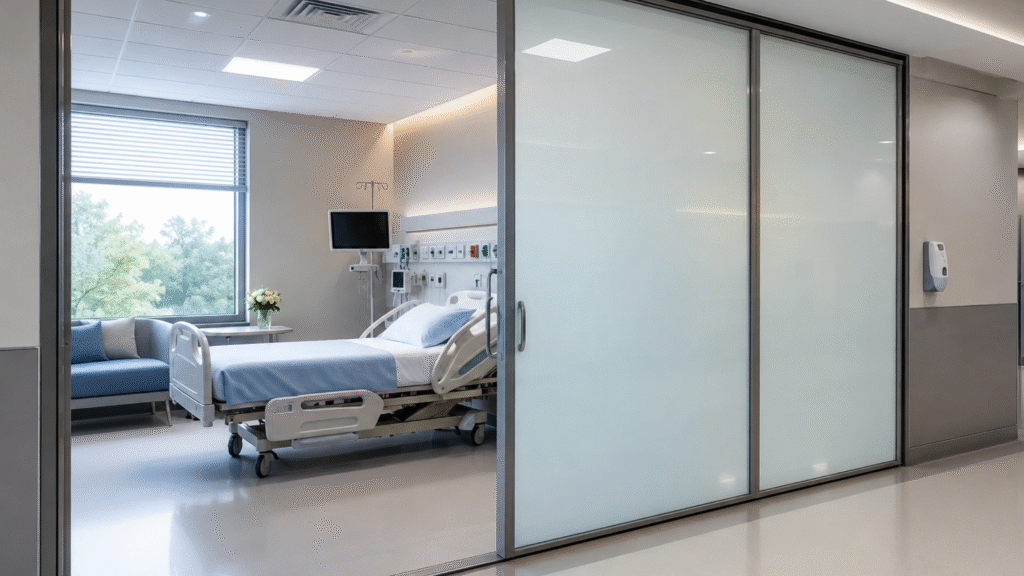
The healthcare industry is continuously evolving to create safer, smarter, and more patient-friendly environments. Modern hospitals and medical facilities are no longer focused only on treatment; they are also prioritizing patient comfort, hygiene, privacy, and operational efficiency. As healthcare infrastructure advances, innovative technologies are being integrated into medical spaces to improve both patient experience and staff productivity. One of the most advanced solutions gaining popularity today is switchable glass for healthcare environments. This smart glass technology is transforming hospitals, clinics, and medical centers by offering instant privacy, enhanced hygiene, and modern interior functionality.
Glasstronn is one of the leading providers of advanced smart glass solutions designed for modern healthcare and medical spaces. Glasstronn continues to help hospitals and healthcare facilities create intelligent and patient-centered environments through innovative switchable glass technologies. From patient rooms and consultation spaces to ICUs and operation theatres, smart glass solutions are redefining modern healthcare interiors.
The Role of Smart Glass in Modern Healthcare
Healthcare environments require a perfect balance between privacy, visibility, hygiene, and efficiency. Traditional privacy solutions such as curtains and blinds often create maintenance challenges and hygiene concerns. Switchable glass offers a modern alternative that enhances both functionality and aesthetics.
By instantly switching between transparent and opaque modes, smart glass allows medical staff to maintain visibility when needed while ensuring patient privacy at the right moments.
This technology supports:
- Better patient care
- Improved operational workflow
- Enhanced infection control
- Modern healthcare infrastructure
What is Switchable Glass?
Switchable glass is an advanced smart glass technology that changes its appearance based on electrical current. It uses PDLC (Polymer Dispersed Liquid Crystal) technology to switch between transparent and frosted states.
Transparent Mode
When power is applied, liquid crystal molecules align and allow light to pass through, making the glass transparent.
Opaque Mode
When the power is switched off, the crystals scatter randomly, causing the glass to become opaque and provide privacy.
The glass can be controlled through:
- Wall switches
- Remote controls
- Smart automation systems
- Mobile applications
This flexibility makes switchable glass an ideal solution for modern healthcare spaces.
Major Challenges in Healthcare Interiors
Modern hospitals and medical centers face several interior design and operational challenges.
Maintaining Patient Privacy
Patients require privacy during consultations, treatments, and recovery.
Hygiene and Infection Control
Traditional curtains and blinds collect dust, bacteria, and allergens, increasing maintenance concerns.
Space Optimization
Healthcare facilities need efficient use of available space without compromising comfort.
Better Natural Lighting
Natural light plays a key role in improving patient mood and recovery.
Operational Efficiency
Medical staff need flexible spaces that support quick communication and visibility.
Switchable glass addresses all these challenges effectively.
How Switchable Glass Solves Healthcare Challenges
Instant Privacy for Patients
One of the biggest advantages of switchable glass is its ability to provide immediate privacy when required.
This is especially beneficial for:
- Patient rooms
- Consultation areas
- Intensive Care Units (ICUs)
- Recovery rooms
Medical staff can instantly switch the glass between transparent and opaque modes without disturbing patients.
Improved Hygiene Standards
Traditional privacy curtains can become breeding grounds for bacteria and dust. Hospitals require solutions that are easy to sanitize and maintain.
Switchable glass offers:
- Smooth and easy-to-clean surfaces
- Reduced risk of contamination
- Better infection control standards
This makes it a highly hygienic solution for healthcare environments.
Better Natural Light Management
Natural light has been shown to improve patient comfort and recovery. Switchable glass allows healthcare facilities to optimize daylight while maintaining privacy.
Benefits include:
- Brighter interiors
- Reduced dependency on artificial lighting
- Enhanced patient well-being
Enhanced Staff Efficiency
Quick privacy control improves communication and workflow within medical environments.
Doctors and healthcare staff can:
- Monitor patients efficiently
- Improve response times
- Maintain visual access when needed
This supports smoother operations and better patient care.
Noise Reduction and Comfort
Modern healthcare spaces require calm and peaceful environments that promote healing and comfort.
Concepts such as Switchable Glass for Noise Free Living: Hush Your Space highlight how smart glass technologies contribute to quieter and more comfortable interiors by improving acoustic performance and reducing distractions.
This is especially important in:
- Recovery rooms
- Consultation spaces
- Wellness centers
Applications of Switchable Glass in Healthcare & Medical Spaces
Patient Rooms
Patient rooms require a balance between openness and privacy. Switchable glass allows healthcare providers to create comfortable environments that adapt to patient needs.
Intensive Care Units (ICUs)
ICUs require constant monitoring while still maintaining patient dignity and privacy.
Switchable glass enables:
- Quick visibility control
- Better medical supervision
- Flexible privacy management
Consultation Rooms
Medical consultations involve confidential discussions that require privacy.
Switchable glass creates:
- Professional consultation spaces
- Instant privacy during appointments
- Better patient comfort
Operation Theatres
Operation theatres require controlled and sterile environments. Smart glass enhances functionality while supporting modern medical infrastructure.
Diagnostic and Imaging Rooms
Diagnostic areas benefit from switchable glass by creating calmer and more comfortable patient environments.
Hospital Reception and Waiting Areas
Reception spaces are the first point of interaction for patients and visitors. Switchable glass helps create modern and welcoming healthcare interiors.
Benefits of Switchable Glass for Healthcare Facilities
| Benefit | Impact on Healthcare |
| Instant Privacy | Improved patient experience |
| Hygienic Solution | Better infection control |
| Smart Automation | Enhanced operational efficiency |
| Modern Aesthetics | Professional medical environments |
| Energy Efficiency | Reduced operational costs |
| Easy Maintenance | Lower maintenance efforts |
Why Hospitals are Adopting Switchable Glass Technology
Healthcare facilities are increasingly adopting smart technologies to improve patient care and operational performance.
Hospitals choose switchable glass because it offers:
- Better patient privacy
- Improved hygiene standards
- Flexible space management
- Modern and premium interiors
Healthcare providers searching for the best switchable glass for healthcare environments often prioritize smart glass solutions because of their advanced functionality and long-term benefits.
Switchable Glass vs Traditional Healthcare Privacy Solutions
Smart Glass vs Curtains
Curtains collect dust and bacteria, while switchable glass provides a cleaner and more hygienic solution.
Smart Glass vs Frosted Glass
Frosted glass offers permanent opacity, whereas switchable glass allows dynamic privacy control.
Smart Glass vs Blinds
Blinds require regular maintenance and often appear outdated in modern healthcare spaces.
Switchable glass offers:
- Better aesthetics
- Easier maintenance
- Improved functionality
Important Factors Before Installing Switchable Glass
Safety and Glass Quality
Healthcare facilities require durable and certified smart glass systems that meet medical safety standards.
Smart Control Features
Hospitals should choose systems compatible with:
- Automation systems
- Remote controls
- Smart healthcare infrastructure
Installation Expertise
Professional installation ensures:
- Long-term durability
- Proper electrical integration
- Smooth functionality
Energy Consumption
Modern switchable glass systems are designed for energy-efficient operation.
Future of Smart Glass in Healthcare
The future of healthcare design is increasingly focused on intelligent infrastructure and patient-centered environments.
Future innovations may include:
- AI-integrated smart glass systems
- Voice-controlled privacy solutions
- Advanced energy-saving technologies
- Smart hospital automation
Switchable glass is expected to become a standard feature in next-generation healthcare facilities.
FAQs
1. What is switchable glass in healthcare?
Switchable glass is smart glass technology that changes between transparent and opaque modes for privacy control.
2. How does switchable glass improve patient privacy?
It allows instant switching between clear and frosted states, ensuring privacy whenever required.
3. Is switchable glass hygienic for hospitals?
Yes, it is easier to clean and maintain than traditional curtains or blinds.
4. Can switchable glass be used in ICUs and operation theatres?
Yes, it is suitable for various healthcare applications, including ICUs and operation theatres.
5. Is switchable glass energy efficient?
Yes, it helps optimize natural lighting and reduce energy consumption.
Conclusion
Switchable glass is transforming healthcare and medical environments by improving privacy, hygiene, efficiency, and patient comfort. From patient rooms and ICUs to consultation spaces and reception areas, smart glass provides a modern and highly functional solution for healthcare infrastructure. Glasstronn continues to deliver advanced smart glass technologies designed to meet the evolving needs of hospitals and medical facilities. Glasstronn ensures high-quality installations and innovative solutions that support smarter and more efficient healthcare environments. Consult Glasstronn Today Upgrade your healthcare spaces with advanced switchable glass solutions. Connect with Glasstronn for expert consultation and professional installation.